

Where
Autonomous
Sales Take Off
Fueling the Future of Autonomous AI Sales
Discover how AI books, transfers, and one-call closes — turning sales pipelines into rocket fuel.
Your Best Closer. Every Call. Monumental Growth.
You Learn → Sales Ignite. Easy Math.
Hear It Now • Real AI Sales Call
No Humans. Real Objections. Real AI Sales Execution.
Most people stop realizing it’s AI halfway through.

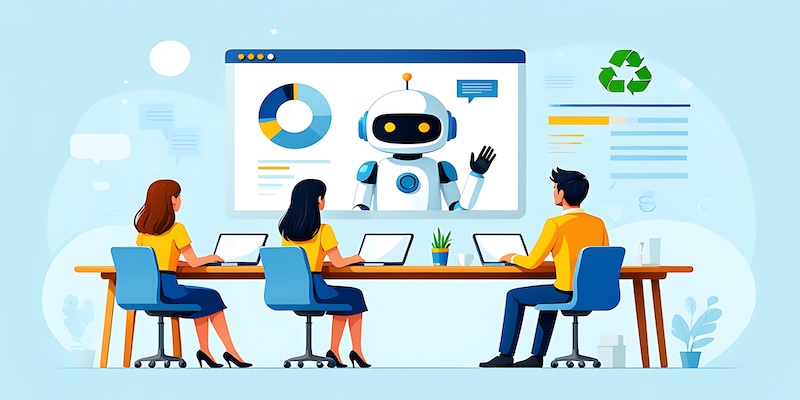
Architecting Sales Teams Built for an AI-First Operating Model
Architecting an AI-first sales organization is no longer a question of incremental tooling or layered automation. The underlying organizational model has already been established in AI-First Sales Organizations. The challenge leaders now face is translating that model into a durable operating architecture—one capable of supporting autonomous intelligence as a persistent execution layer rather than a supporting function.
To set this architectural foundation, leaders increasingly draw from research-driven blueprints found in the AI-first org strategy hub, where modern sales transformation frameworks emphasize how organizational design must align with AI capabilities, not the other way around. This shift moves the conversation beyond adoption and into execution, requiring leadership fluency in orchestration, cognitive load distribution, and systemic decision design.
Executives implementing AI-first organizations must therefore adopt a structural mindset. Traditional hierarchies—built around territory managers, SDR teams, closers, and forecasting roles—were optimized for a human-driven environment. AI-first operating models require structures that distribute intelligence across every node of the system. This means redesigning roles, data pathways, operational rhythms, escalation rules, and resource allocation workflows so that autonomous systems become full participants in the sales organization, not downstream tools.
Why AI-First Architecture Requires New Leadership Models
In AI-first environments, organizational strategy cannot be separated from system architecture. Leadership responsibility extends beyond influencing people to shaping the conditions under which autonomous systems operate. Leaders must understand how models behave under uncertainty, how they escalate ambiguity, how they integrate across channels, and how architectural constraints influence execution quality at scale. These competencies are reflected in modern leadership transformation approaches such as those explored in leadership transformation frameworks, which examine how AI reshapes behavioral expectations, cultural alignment, and decision accountability.
The autonomy of AI systems also reshapes how sales organizations scale. Structures must remain flexible enough to accommodate continuous model updates, evolving conversational states, improved routing logic, and cross-functional data synchronization. This architectural adaptability aligns directly with guidance found in the AI strategy and leadership playbook, which emphasizes iterative redesign cycles driven by autonomous system intelligence rather than static annual planning.
Redefining Roles for AI-First Sales Teams
Once architecture becomes the focus, role design must be revisited across the sales organization. Certain responsibilities contract, others expand, and entirely new coordination roles emerge. The objective is not to replace human capability, but to amplify it through systems that can detect buyer readiness, emotional signals, and behavioral patterns with greater precision than manual processes allow. This role evolution is guided by principles outlined in the AI Sales Team org modeling frameworks, which describe how human contributors and AI agents operate within unified execution structures.
Within these evolving organizational charts, AI-first roles begin to take shape:
- AI Workflow Designers — specialists who architect interaction flows between autonomous systems and human teams.
- Signal Intelligence Analysts — operators who interpret emotional, behavioral, and contextual data captured across the pipeline.
- Autonomous Routing Strategists — experts who design allocation rules determining when AI engages alone, escalates, or hands off to a human representative.
- AI Sales Ethnographers — leaders who study buyer patterns at scale to improve AI conversational and decision models.
These roles complement traditional account executives, strategists, and managers, but they reshape how the entire organization functions. Instead of viewing sales as a linearly managed funnel, leaders begin to see it as a network of humans and systems collaborating in real time. Reporting lines still exist, but the real leverage comes from how quickly information moves, how intelligently work is assigned, and how effectively people can intervene when the system surfaces ambiguity or risk.
AI-first sales organizations also rely on intelligent scheduling and coordination engines that treat time, attention, and buyer readiness as strategic resources. Instead of relying on ad hoc calendar management or manual follow-up tracking, these systems continuously prioritize which conversations should happen next, with whom, and through which channel. As scheduling logic becomes more tightly integrated with AI-driven routing and forecasting, leaders gain a far clearer picture of where human contribution creates the most leverage across the sales organization.
Architecting AI-First Operating Models
Designing an AI-first sales organization requires more than adding automation layers—it requires architecting operating models where AI, human expertise, and intelligent infrastructure function as a unified decision engine. Leaders must define how work moves through the system, how information is interpreted, and how roles collaborate in environments where machine intelligence continuously influences outcomes.
This design challenge often begins with the operational principles outlined in strategic deployment foundations, which describe how organizations transition from early experimentation to stable, scalable AI adoption. These foundations establish the baseline requirements for data orchestration, conversational integration, and real-time interpretability—components without which AI-first architectures fail to function reliably.
The next step is defining how autonomous systems participate in daily revenue operations. This includes establishing escalation pathways, confidence thresholds, override rules, and handoff sequencing that are understandable to both frontline teams and leadership. When those mechanics are made explicit—rather than hidden in technical configuration—organizations are far better equipped to maintain buyer trust and regulatory alignment as autonomy increases.
AI-first operating models thrive when they are designed to support three core capabilities: interpretation, orchestration, and acceleration. Interpretation refers to the organization’s ability to capture and understand signals—emotional, behavioral, contextual, and transactional. Orchestration involves directing these interpretations through structured decision flows, determining whether AI, humans, or hybrid interactions should engage. Acceleration occurs when the system learns from outcomes and deploys insights to shorten cycles and increase conversion predictability.
This model-centric thinking reshapes traditional revenue operations. Instead of routing tasks manually or relying on inconsistency-prone judgment calls, AI-first organizations deploy architectures that manage interaction logic algorithmically. This results in faster response times, improved buyer alignment, and fewer operational bottlenecks—benefits that become increasingly significant as teams integrate more sophisticated multi-model workflows and prediction layers.
Aligning Technical Architecture With Organizational Design
AI-first sales organizations succeed when their technical architecture and organizational design evolve as a single system. Technology decisions are leadership decisions, and leadership decisions increasingly rely on the constraints and opportunities presented by autonomous systems. To support scalable autonomy, leaders must ensure that the organization’s data pipelines, decision models, workflow engines, and escalation logic are fully aligned with its strategic outcomes.
This alignment process is supported by insights found in technical architecture alignment, which explains how enterprises integrate model optimization cycles, real-time intelligence layers, and adaptive orchestration frameworks. The goal is to create an infrastructure that allows AI systems to interpret buyer conditions, adjust engagement strategies, and coordinate autonomously with human contributors—all while maintaining organizational clarity and system reliability.
In practice, this means AI-first organizations design for continuous variance detection. Systems must monitor fluctuations in buyer tone, intent, momentum, and sentiment. When these signals deviate from established patterns, the architecture automatically adjusts—reallocating resources, shifting engagement channels, or escalating to human representatives. This dynamic responsiveness represents a fundamental advantage of AI-first organizations: they operate not through rigid processes, but through adaptive intelligence.
These architectures also support advanced dialogue persona models that maintain consistent identity, message structure, and emotional tone across all buyer interactions. As explored in dialogue persona identity, the design of these personas plays a critical role in shaping buyer experience, ensuring that autonomous interactions feel coherent, trustworthy, and strategically grounded.
- Data Synchronization Layers ensure that every AI model receives real-time updates across CRM, conversational logs, and decision engines.
- Unified Behavior Models allow AI systems to interpret emotional and contextual patterns consistently across teams and channels.
- Adaptive Workflow Engines orchestrate interactions by assigning work to AI or human pathways based on probabilistic reasoning.
- Governance Circuits monitor system decisions, providing transparency and override controls for high-stakes scenarios.
These capabilities transform AI from a tool into a strategic collaborator. Instead of executing isolated tasks, autonomous systems become integrated participants in the organization’s decision ecosystem, enabling leaders to operate with deeper insight, higher operational reliability, and significantly enhanced scale.
Design Principles for AI-First Organizational Structures
Building an AI-first sales organization is ultimately an exercise in architectural design. Structures must reflect how intelligence flows through the system, how decisions propagate across roles, and how humans and AI collaborate at every interaction layer. Traditional sales structures emphasize reporting hierarchies; AI-first structures emphasize information hierarchies—the strategic movement of data, signals, and decision context throughout the organization.
These design principles align directly with the best practices outlined in the AI Sales Force structural design frameworks, which illustrate the transition from linear human-centric funnels to multi-pathway intelligence systems. In this model, AI assumes responsibility for prediction, orchestration, and sentiment interpretation, while human leaders guide strategy, escalation judgment, and ethical oversight. Together, they form a dual-intelligence organization capable of scaling far beyond traditional boundaries.
Because AI-first organizations depend on dynamic information flow, leadership must design structures that support rapid signal ingestion and contextual interpretation. Instead of siloed teams handing off opportunities sequentially, AI-first structures operate through distributed decision networks—groups of human and autonomous actors that process information concurrently. This reduces bottlenecks, accelerates deal cycles, and improves alignment between buyer behavior and organizational response.
At the center of AI-first design is the principle of intelligent role compression. Tasks historically distributed across multiple human roles can now be unified under autonomous systems capable of managing diverse responsibilities simultaneously. For example, a single model may perform prospecting analysis, emotional readiness detection, objection framing, and routing decisions. This consolidation allows organizations to allocate human talent to higher-order creativity, strategic planning, and complex relationship-building.
Strategy Is Only Real When It Executes
Omni Rocket turns leadership vision into operational sales behavior.
What Strategic Execution Looks Like in Practice:
- Intent-First Conversations – Prioritizes understanding before persuasion.
- Decision Framework Control – Guides buyers toward clear outcomes.
- Role Fluidity – Shifts seamlessly between Bookora, Transfora, and Closora functions.
- Leadership-Defined Guardrails – Executes exactly as designed by your team.
- Predictable Performance – Strategy delivered consistently, not variably.
Omni Rocket Live → Strategy, Executed Without Drift.
Building Human–AI Collaboration Models
AI-first organizations succeed by designing explicit collaboration models, ensuring that humans and AI systems contribute according to their strengths. AI excels in pattern detection, emotional signal interpretation, and real-time decision adjustments. Humans excel in nuanced judgment, creative problem solving, and navigating political or high-ambiguity contexts. The most effective organizational structures combine these capabilities intentionally, ensuring no capability is underutilized or misaligned.
This philosophy is deeply aligned with research on hybrid leadership models found in hybrid leadership systems. Here, leadership is not defined by authority alone, but by an ongoing negotiation between algorithmic outputs and human interpretation. Leaders evaluate model recommendations, adjust them based on strategic insight, and continuously refine organizational workflows based on performance data.
To enable effective collaboration, AI-first sales organizations implement three structural mechanisms:
- Shared Decision Interfaces — environments where humans and AI view the same signals and coordinate responses in real time.
- Confidence-Based Routing — workflows where AI escalates to humans when emotional or contextual uncertainty exceeds threshold.
- Explainability Loops — processes ensuring AI recommendations are transparent, interpretable, and auditable by leadership.
These mechanisms reduce friction between human intuition and machine logic. They also build organizational trust in autonomous systems, allowing teams to deploy increasingly sophisticated models without the cultural resistance often associated with automation-led change. As trust solidifies, AI-first organizations can expand autonomy safely, ensuring each new capability integrates seamlessly into the broader revenue engine.
Governance Frameworks for AI-First Sales Systems
AI-first structures require governance frameworks that anticipate risk, manage uncertainty, and preserve ethical integrity. These frameworks are not merely compliance checklists—they are strategic instruments that ensure autonomous systems behave in ways that reinforce organizational values and protect long-term buyer trust. Effective governance requires leaders to understand the implications of real-time model decisions and to design controls that guide system behavior in alignment with enterprise standards.
These governance requirements align with the insights detailed in AI compliance fundamentals, where decision transparency, escalation auditing, and bias mitigation become essential components of AI-first organizational structure. By embedding these controls directly into workflows, leaders ensure that autonomous systems operate predictably—even as they evolve through continuous learning cycles.
Governance frameworks also reinforce long-term organizational resilience. They protect the enterprise from system drift, ensure escalation pathways are consistently followed, and provide ethical guardrails for high-impact decisions. By integrating governance deeply into organizational design, AI-first organizations maintain the agility of autonomous systems without sacrificing oversight or control.
Operational Execution in AI-First Revenue Environments
Even the strongest AI-first designs fail without disciplined operational execution. AI-first sales organizations require operating rhythms that synchronize human and autonomous activity, maintain real-time situational awareness, and ensure continuous refinement of workflows as conditions shift. Execution is no longer about enforcing manual process adherence—it is about ensuring that models, humans, and systems remain aligned through shared intelligence loops and adaptive decision layers.
Daily operations in AI-first environments revolve around continuous intelligence updates. AI models generate insights on sentiment fluctuations, pipeline health, objection trends, and conversational tone shifts. These insights update in real time, enabling human leaders to evaluate patterns across thousands of micro-interactions that would otherwise remain invisible. This dynamic, signal-driven execution model collapses the delay between insight and action—a structural advantage unavailable to traditional organizations.
Within these operational environments, intelligent scheduling and coordination tools such as Bookora AI-first scheduling architecture play a crucial role. By prioritizing buyers based on readiness, sentiment, and engagement likelihood, Bookora ensures that both AI and human sellers engage at precisely the right moments. This eliminates coordination inefficiencies and ensures that the sales organization operates with orchestration-level precision across all channels.
Operational alignment becomes even more essential as AI-first organizations adopt multi-pathway engagement models. These models allow AI systems to choose between several conversational strategies—direct engagement, AI-assisted escalation, emotional analysis, or human takeover—based on real-time probability scoring. Leaders must design operational frameworks that support these multi-pathway decisions, ensuring that outcomes remain consistent, auditable, and strategically aligned.
To maintain velocity and accuracy, AI-first organizations implement operational review cycles that differ from traditional sales meetings. Instead of focusing solely on pipeline status or quota projections, these sessions analyze:
- Model drift indicators — where AI predictions begin deviating from expected performance patterns.
- Signal anomalies — unusual sentiment or behavior changes across buyer segments.
- Workflow efficiency — bottlenecks caused by routing thresholds, confidence scoring, or handoff logic.
- AI-to-human escalation consistency — ensuring that transitions uphold brand voice, trust, and contextual continuity.
These intelligence-driven operating rhythms allow leaders to maintain clarity across the system, refine decision thresholds, and introduce new capabilities without jeopardizing structural integrity. As a result, operational speed increases while risk decreases—an outcome impossible in non-AI-first environments where decisions lag behind real-time buyer behavior.
Scaling AI-First Organizations for Long-Term Growth
After the initial architecture proves successful, leaders must design for scale. AI-first sales organizations grow not through headcount expansion, but through intelligence expansion. Scaling occurs when autonomous systems can support more interactions, interpret more signals, engage in more conversational states, and coordinate more workflows—without increasing operational complexity or eroding decision quality.
Scaling AI-first structures requires leaders to treat transformation as an ongoing discipline rather than a one-time initiative. As autonomy expands, leadership routines must evolve to include regular reviews of system behavior, cultural adaptation, and model impact on day-to-day work. Executives who treat leadership evolution as a continuous design problem—not just a training problem—create organizations that can absorb new AI capabilities without destabilizing the people, processes, and relationships that depend on them.
Structural scaling also requires organizations to continually revisit how their models behave under new market conditions, new product strategies, and new messaging frameworks. As more signals flow into the system, even well-designed models can start to behave in unexpected ways. Successful leaders treat this not as a crisis but as a natural part of operating an intelligent system—and they invest in recurring evaluation cycles that keep performance sharp without slowing down innovation.
Finally, scaling requires organizations to strengthen their AI governance frameworks, ensuring that both ethical standards and operational integrity scale alongside model capabilities. These frameworks must be designed to adapt as new AI functions enter the system, protecting the organization from drift, bias amplification, or unintended escalation patterns. Leaders who anticipate these governance needs position their AI-first organizations for sustainable, responsible long-term growth.
Integrating Culture, Systems, and Strategy in AI-First Organizations
Designing an AI-first sales organization is not solely a technical challenge—it is a cultural and strategic one. Culture determines how teams respond to automation, how they collaborate with autonomous systems, and how they interpret the shifting nature of work. Strategy ensures that structural changes align with enterprise priorities, rather than becoming isolated technical experiments. Systems provide the operational backbone that allows both culture and strategy to scale coherently.
To foster a high-performance AI-first culture, leaders must cultivate trust in autonomous systems, transparency in decision logic, and shared ownership over results. Teams must learn to understand model recommendations, question them appropriately, and escalate uncertainty without fear of judgment. This cultural foundation drives responsible adoption and accelerates organizational transformation.
Strategically, AI-first organizations must maintain unified direction across human and machine capabilities. This requires leadership teams to treat AI models as strategic contributors—not simply as operational tools. Leaders set the high-level objectives, design the governance structures, and ensure that model behavior aligns with the organization’s values and buyer experience standards. This integration prevents fragmentation and ensures that autonomy enhances, rather than disrupts, enterprise coherence.
Systems, meanwhile, enable the execution of AI-first strategy at scale. They provide the mechanisms for continuous learning, real-time adaptation, and multi-model orchestration. With the right system design, AI-first organizations can expand engagement capacity, increase prediction accuracy, and deepen their understanding of buyer behavior—all without sacrificing operational reliability.
The Future of AI-First Sales Organizations
AI-first sales organizations represent a new paradigm in revenue leadership—a shift from manual, intuition-driven sales processes to systems governed by intelligence, precision, and adaptive reasoning. The future belongs to organizations that build structures where AI participates fully in the revenue engine, not as an add-on, but as a core architectural element.
These organizations will outperform traditional competitors by expanding their analytical capabilities, accelerating their decision cycles, and ensuring every buyer interaction is grounded in real-time behavioral interpretation. While human expertise continues to guide strategy, negotiation, and relationship-building, autonomous systems handle detection, orchestration, and optimization. This dual-intelligence model produces a revenue engine that is faster, more intelligent, and fundamentally more resilient than anything possible in pre-AI eras.
To sustain this advantage, leaders must approach AI-first design as a long-term discipline. Structures must evolve, roles must adapt, and systems must mature. As new capabilities emerge—from advanced dialogue personas to emotion-adaptive engagement engines—organizational design must shift accordingly. This ongoing evolution ensures that AI-first organizations remain competitive, responsible, and strategically aligned with the fast-moving dynamics of modern buyer psychology.
Conclusion: Designing Organizations That Think, Learn, and Scale
The shift to AI-first sales organizations is more than a transformation—it is an architectural revolution. By designing structures where human expertise and machine intelligence operate in coordinated harmony, enterprises unlock levels of scale, precision, and adaptability that are impossible through traditional means. Leaders who embrace AI-first design principles create organizations that can interpret signals with greater accuracy, respond to buyers with greater relevance, and align their operations with far greater strategic coherence.
As organizations move deeper into the era of autonomous systems, the goal is no longer to integrate AI into existing structures, but to design structures that assume AI from the start. When done effectively, AI-first sales organizations become engines of continuous learning—systems that refine themselves through every interaction and elevate the performance of both human and machine contributors. This evolution lays the foundation for sustainable competitive advantage and prepares the enterprise for the next decade of innovation, guided by the strategic and economic insights detailed in the AI Sales Fusion pricing analysis.

Comments