

Where
Autonomous
Sales Take Off
Fueling the Future of Autonomous AI Sales
Discover how AI books, transfers, and one-call closes — turning sales pipelines into rocket fuel.
Your Best Closer. Every Call. Monumental Growth.
You Learn → Sales Ignite. Easy Math.
Hear It Now • Real AI Sales Call
No Humans. Real Objections. Real AI Sales Execution.
Most people stop realizing it’s AI halfway through.

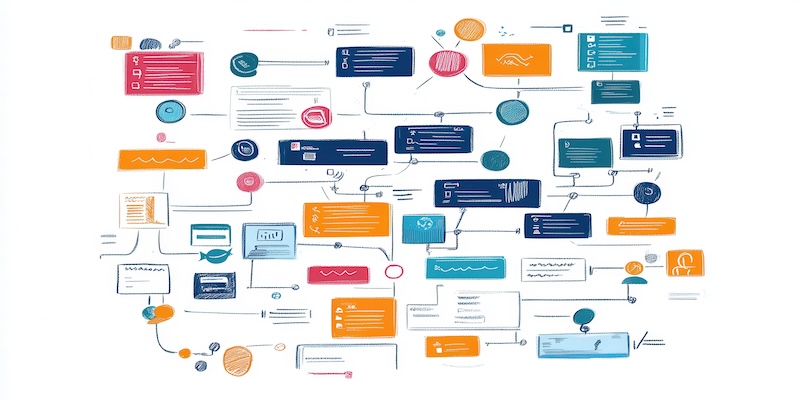
How AI Sales Systems Behave During Live Conversations
Live execution mechanics determine whether an AI sales system behaves like a responsive participant in a conversation or like a delayed automation script. While structural coordination is explained through Multi-Agent Sales Orchestration Principles, real performance is decided in the milliseconds between a buyer speaking and the system choosing how to respond. That narrow window is where timing, interruption, hesitation, and confirmation signals either translate into accurate action or degrade into costly misfires. Understanding what happens inside that window is essential to understanding why some autonomous sales deployments scale predictably while others deteriorate under real-world conditions.
Modern autonomous execution models must operate inside conversations that are nonlinear, interrupt-driven, and emotionally dynamic. Buyers pause to think, change direction mid-sentence, soften objections before reasserting them, and signal readiness through tone as much as words. These micro-behaviors cannot be captured through delayed workflow steps or batch processing logic. Instead, they require systems that continuously evaluate live inputs and update internal state before every response. This behavioral layer sits at the core of modern autonomous execution models, where the difference between success and failure often hinges on how accurately timing is interpreted rather than how persuasive language sounds.
During live calls, execution decisions are shaped by technical signals flowing from voice transport, transcription engines, and prompt controllers. Start-speaking detection, barge-in events, silence thresholds, voicemail identification, and call timeout settings all act as behavioral inputs that shape what the AI should do next. If a buyer interrupts, the system must suppress its planned response and re-evaluate context. If silence extends beyond a natural thinking pause, it must decide whether to reassure, clarify, or escalate. These are not abstract design concerns; they are runtime behaviors that determine whether automation feels attentive or robotic in the moment.
Task-based systems, by contrast, treat conversations as a sequence of completed steps rather than a stream of evolving signals. Actions are triggered after conditions are recorded instead of while they are unfolding. This introduces latency between buyer behavior and system response, distorting intent and increasing the risk of misalignment. In high-volume environments, these delays compound, turning minor timing mismatches into systemic performance degradation. Live execution mechanics therefore represent the operational boundary between automation that scales and automation that drifts away from real buyer behavior.
- Timing awareness: evaluate signals at the moment they occur, not after completion.
- Interrupt responsiveness: adapt immediately when buyers change conversational flow.
- State continuity: update internal context before every response.
- Latency minimization: prevent delays from distorting buyer intent.
Grasping how systems behave during live interactions establishes the baseline for comparing event-driven execution with task automation. The next section explores why real-time signals carry more operational value than queued task triggers in AI sales environments.
Why Real Time Signals Matter More Than Task Queues
Real-time signals carry operational meaning that task queues cannot preserve. In a live sales conversation, intent is expressed through pacing, overlap, hesitation, and confirmation language that unfolds moment by moment. When an AI system waits for a task step to complete before evaluating what to do next, it is already responding to history rather than to the present. This temporal lag turns dynamic human behavior into static records, stripping away the contextual cues that distinguish curiosity from commitment. Systems that act on queued tasks therefore operate on delayed interpretations of buyer intent, increasing the likelihood of mistimed responses and misaligned actions.
Queue-based logic was designed for predictable workflows where inputs arrive in orderly sequences and outcomes can tolerate delay. Sales conversations violate those assumptions constantly. Buyers interrupt explanations, ask clarifying questions mid-sentence, or shift priorities as new information surfaces. In these conditions, waiting for a workflow checkpoint before updating execution logic introduces friction that buyers can feel. The AI may continue explaining after a buyer has already agreed, escalate before readiness is fully expressed, or pause awkwardly because the system is still “processing” a prior step. These breakdowns are not language failures; they are timing failures rooted in task-driven design.
Operational data consistently shows that the majority of execution errors in automated sales environments stem from latency between signal occurrence and action authorization. Studies analyzing task automation performance limits highlight how queue delays distort conversational meaning, especially under load when multiple interactions compete for processing time. As concurrency increases, queue depth grows, and the gap between buyer behavior and system response widens. What begins as a sub-second delay becomes a multi-second drift, enough to miss a confirmation cue or respond to an objection that has already been resolved.
Event-driven evaluation, by contrast, treats each conversational change as an immediate decision point. When speech onset is detected, when silence exceeds a threshold, or when commitment language appears in transcription, the system updates its internal state instantly and re-evaluates permissible actions. There is no waiting for a “next step” to complete because execution authority is tied to current conditions rather than to workflow milestones. This continuous evaluation loop preserves intent fidelity and allows the AI to behave as if it is tracking the conversation in real time rather than replaying it from memory.
- Temporal fidelity: preserve when signals occur, not just what they contain.
- Immediate evaluation: reassess execution authority with every new cue.
- Queue elimination: remove delays that distort conversational meaning.
- Load resilience: maintain timing accuracy even as call volume grows.
Recognizing the limits of queued logic clarifies why timing must be treated as a first-class input in autonomous sales systems. The next section examines how voice timing specifically influences AI execution decisions during live buyer interactions.
How Voice Timing Changes AI Execution Decisions
Voice timing is one of the most information-rich signals available to an AI sales system, yet it is frequently underutilized in task-based automation. The moment a buyer begins speaking, interrupts, or pauses mid-thought provides context that cannot be extracted from text alone. Timing reveals cognitive load, hesitation, agreement, or confusion before those states are fully verbalized. Systems that monitor and react to these micro-timing cues can adjust pacing, clarify sooner, or hold silence when reflection is occurring. Systems that ignore timing operate blind to these behavioral indicators, often responding in ways that feel rushed, delayed, or out of sync with the buyer.
Start-speaking detection and barge-in handling are especially critical during objection resolution and commitment framing. When a buyer begins to speak over the AI, that overlap is rarely accidental; it signals urgency, correction, or a shift in understanding. If the system continues its scripted response instead of yielding, it violates conversational norms and erodes trust. Proper timing-aware execution requires immediate suppression of outgoing speech, rapid context reassessment, and a reoriented reply that acknowledges the buyer’s interruption. These adjustments must occur within fractions of a second to maintain conversational credibility.
Silence interpretation is equally nuanced. Short pauses often indicate thinking, while extended silence may signal disengagement, confusion, or environmental interruption. AI systems must differentiate between these states using calibrated silence thresholds tied to conversation stage and buyer behavior history. A premature prompt can feel pushy, while excessive delay can feel inattentive. Timing-aware systems continuously balance responsiveness with restraint, ensuring that follow-ups align with natural conversational rhythm rather than arbitrary timeout settings.
These timing signals become actionable only when execution logic is designed to process them continuously rather than at discrete workflow checkpoints. Architectures built around real-time AI agents treat speech timing, interruption patterns, and pause duration as live decision inputs, not post-conversation analytics. This enables the AI to adjust tone, pacing, and escalation pathways while the conversation is still unfolding, preserving alignment between system behavior and buyer expectations.
- Speech onset awareness: recognize when buyers begin speaking and yield immediately.
- Interrupt sensitivity: treat barge-ins as intent signals, not noise.
- Silence calibration: distinguish reflective pauses from disengagement.
- Rhythm alignment: match system pacing to conversational flow.
Understanding how timing shapes behavior highlights why live execution must be governed by continuous signals rather than fixed steps. The next section explores how autonomous systems manage interruptions without breaking conversational coherence.
Interruption Handling in Autonomous Sales Calls
Interruptions are not conversational errors; they are behavioral signals that carry meaning about urgency, disagreement, or evolving understanding. In live sales conversations, buyers interrupt when they want to correct an assumption, accelerate toward a decision, or express concern before a point is completed. Systems built on rigid task flows interpret interruptions as noise that must be filtered out, often continuing scripted speech while the buyer is already talking. This creates conversational collisions that feel unnatural and undermine credibility. Effective autonomous sales systems instead treat interruptions as high-priority events that trigger immediate execution recalibration.
Technically, interruption handling begins with real-time detection of overlapping speech and rapid suppression of outbound audio. Once a barge-in is identified, the system must halt its current prompt, preserve partial context, and shift into a listening-first state. This shift is not merely acoustic; it is logical. Execution authority must pause until the buyer’s new input is transcribed, interpreted, and reconciled with prior intent signals. Systems that fail to suspend action risk responding to outdated context, which can escalate objections that were about to be resolved or miss cues that indicate readiness to proceed.
Coordination becomes more complex when multiple specialized agents are active within the same interaction. Booking logic, qualification logic, and closing logic may each have different timing sensitivities and response strategies. Without synchronized state, one component may continue progressing while another attempts to pause. Frameworks designed around multi-agent execution systems address this by centralizing interruption events and propagating them across all active execution layers, ensuring that every agent operates from the same updated conversational state.
Operationally, proper interruption handling preserves conversational coherence and buyer trust. Buyers experience the system as attentive and adaptive rather than scripted and intrusive. The AI appears to “listen” in a way that aligns with human conversational norms, which increases willingness to continue the interaction. Conversely, systems that ignore interruptions often generate the very resistance they later attempt to overcome, turning minor clarifications into major objections simply because they responded at the wrong time.
- Immediate suppression: stop outbound speech the moment overlap is detected.
- Context preservation: retain partial state without advancing execution.
- Shared updates: propagate interruption events across all active agents.
- Trust alignment: match human expectations for turn-taking behavior.
Once interruptions are handled correctly, the next challenge is interpreting what happens when buyers say nothing at all. The following section examines how silence detection influences intent interpretation and execution pacing.
Silence Detection and Buyer Intent Interpretation
Silence is one of the most misinterpreted signals in automated sales systems. In human conversations, pauses can indicate thoughtfulness, uncertainty, distraction, or disengagement depending on timing and context. Task-based systems often treat silence as an absence of data, triggering generic follow-ups or escalation logic after fixed timeouts. This approach ignores the behavioral meaning embedded in pause duration and conversational stage. Event-driven execution, by contrast, treats silence as an active signal whose interpretation depends on prior interaction flow and current decision thresholds.
Short pauses frequently occur when buyers are processing new information or weighing an option. Interrupting too quickly can create pressure, while waiting too long can signal inattentiveness. AI systems must therefore calibrate silence thresholds dynamically, adjusting based on the buyer’s speech cadence, the complexity of the topic, and the progression of the conversation. These calibrations are not cosmetic; they directly influence whether the AI advances, clarifies, reassures, or simply allows more thinking time. Proper silence handling helps the system align with natural cognitive rhythms rather than imposing artificial pacing.
Extended silence carries different implications. It may signal disengagement, environmental interruption, or emotional hesitation before a decision. At this point, execution logic must determine whether to re-engage with a prompt, offer assistance, or gracefully close the interaction. Systems engineered for event-driven sales capacity treat prolonged silence as a conditional decision event, evaluating recent intent signals and conversation state before acting. This prevents premature escalation while still maintaining conversational momentum.
From a runtime perspective, silence detection must operate continuously and in coordination with other timing signals such as speech onset and interruption patterns. A pause immediately following a pricing explanation differs from one that occurs after confirming next steps. Without contextual awareness, silence triggers become blunt instruments that either rush the buyer or allow momentum to decay. With context-sensitive evaluation, silence becomes a diagnostic tool for intent rather than a timer for scripted responses.
- Contextual thresholds: adjust pause interpretation based on conversation stage.
- Cognitive pacing: allow time for reflection without losing engagement.
- Conditional re-engagement: respond differently to short versus extended silence.
- Signal coordination: interpret silence alongside timing and speech cues.
Interpreting silence accurately ensures that AI systems neither rush nor abandon buyers during critical decision moments. The next section explores how internal state updates during conversations influence what actions the system is allowed to take.
Mid Conversation State Updates and Action Control
Conversation state is not a static record captured at checkpoints; it is a continuously evolving representation of buyer intent, context, and permissions. Every new utterance, interruption, pause, or clarification modifies what the system should be allowed to do next. In live execution environments, internal state must update in real time, before each response is generated, so that actions reflect the latest interaction reality rather than an earlier snapshot. Systems that rely on step-based updates risk acting on outdated assumptions, such as continuing qualification after readiness has been confirmed or attempting to close before objections have fully surfaced.
State updates include tracking commitment signals, unresolved concerns, prior confirmations, and explicit denials. When a buyer says, “That makes sense,” internal readiness may increase. When they add, “But I’m not sure about timing,” a constraint must be recorded immediately. These signals should not overwrite each other; they should accumulate as structured state transitions that influence future execution authority. Task-driven workflows often collapse these nuances into binary fields, losing the progression of intent that unfolds across multiple conversational turns.
Execution control depends on these live state transitions. Authorization logic must reference current state before performing any action such as scheduling, routing, or sending follow-up information. Systems that use event-based orchestration layers ensure that every potential action is gated against the most recent intent evidence, preventing premature escalation or redundant clarification. This continuous gating aligns execution authority with what the buyer has actually expressed, not what a prior workflow stage assumed.
Operational reliability improves when state is treated as a living model rather than a checklist of completed tasks. Engineers can trace how intent evolved, operators can diagnose why an action was permitted or denied, and system designers can refine thresholds based on observable transitions. Without mid-conversation state updates, AI systems drift into scripted behavior that ignores subtle shifts in buyer readiness, undermining both accuracy and trust.
- Continuous updates: refresh intent state after every meaningful interaction change.
- Constraint tracking: preserve objections and limits alongside confirmations.
- Live authorization: gate actions using the latest state, not historical steps.
- Traceable transitions: log how readiness evolves across the conversation.
With live state guiding execution, the structural difference between event streams and step-based workflows becomes more visible. The next section examines how event streams replace traditional step sequencing in autonomous sales systems.

Performance Isn’t Claimed — It’s Demonstrated
Omni Rocket shows how sales systems behave under real conditions.
Technical Performance You Can Experience:
- Sub-Second Response Logic – Engages faster than human teams can.
- State-Aware Conversations – Maintains context across every interaction.
- System-Level Orchestration – One AI, multiple operational roles.
- Load-Resilient Execution – Performs consistently at scale.
- Clean CRM Integration – Actions reflected instantly across systems.
Omni Rocket Live → Performance You Don’t Have to Imagine.
How Event Streams Replace Step Based Workflows
Event streams represent a fundamental shift from viewing sales execution as a checklist of completed steps to viewing it as a continuous flow of observable changes. In step-based workflows, logic advances only when predefined milestones are reached, such as a form submission, a field update, or a completed prompt. This structure assumes that meaningful signals arrive in orderly sequences and that execution can safely wait for formal checkpoints. Live sales conversations contradict this assumption. Signals emerge unpredictably and often carry meaning before a “step” can be recorded, requiring systems to respond to unfolding behavior rather than to logged events.
An event stream captures these unfolding changes as they happen: speech onset, interruption, silence duration, confirmation language, hesitation markers, and shifts in tone or pacing. Each of these becomes an event with timestamped context, allowing the system to interpret intent as a sequence of real-time signals instead of as a series of completed workflow stages. This model preserves temporal fidelity, ensuring that execution logic always references what is happening now, not what was true at the last recorded checkpoint. The difference is subtle in low-volume environments but decisive when interactions become dense and fast-moving.
Step-based workflows struggle under these conditions because they compress rich conversational behavior into simplified status changes. A buyer who transitions from curiosity to readiness over several turns may be represented by a single “qualified” flag, masking the progression that led there. Event streams, by contrast, preserve each transition, enabling execution logic to weigh cumulative evidence before acting. This reduces overreaction to isolated signals and prevents the system from advancing prematurely based on incomplete information.
From an engineering standpoint, adopting event streams requires rethinking how data moves through the system. Instead of triggering actions when a step completes, the system evaluates streams of signals in near real time, updating internal state and recalculating execution authority continuously. Designs aligned with high-throughput sales architectures emphasize this streaming model because it scales more reliably under concurrency, where waiting for serialized steps would introduce unacceptable delay.
- Continuous inputs: treat conversational changes as a live signal flow.
- Temporal precision: retain exact timing of each behavioral cue.
- Cumulative context: evaluate patterns across multiple events, not single steps.
- Scalable evaluation: process signals in parallel rather than sequentially.
Understanding the shift from steps to streams clarifies why latency becomes the next critical factor in live execution. The following section examines how delayed processing disrupts timing-sensitive decisions in autonomous sales systems.
Preventing Delayed Actions in High Latency Systems
Latency is one of the most underestimated threats to live AI sales performance. Even small delays between signal detection and execution can distort conversational timing, causing responses to arrive too early, too late, or out of context. In task-based environments, latency accumulates as events move through queues, APIs, and intermediate processing layers before a decision is made. Each hop introduces milliseconds of delay that compound under load, widening the gap between buyer behavior and system response. What begins as negligible drift can quickly become perceptible, especially during fast-paced objection handling or commitment moments.
High-latency behavior often manifests as the AI “talking past” the buyer. The system continues a prepared response after the buyer has already interjected, confirms steps the buyer has not yet agreed to, or pauses awkwardly while waiting for backend confirmation. These breakdowns are frequently misattributed to prompt quality or model capability, when the root cause is timing misalignment. If execution authority is granted based on delayed information, the AI effectively operates one step behind the conversation, reducing perceived intelligence and eroding trust.
Engineering teams must therefore design execution paths that minimize delay between signal generation and decision logic. This involves reducing intermediate transformations, streaming transcription updates instead of batching them, and ensuring that authorization checks occur in-memory rather than through chained external calls. Research into sales tooling fragmentation impact shows that distributed, loosely integrated stacks are especially prone to latency drift because each additional integration point introduces variability in response time.
Operationally, preventing latency is as much about architecture discipline as infrastructure speed. Systems must be designed so that decisions can be made immediately upon receiving a valid signal, without waiting for nonessential confirmations or secondary data sources. By aligning execution with the fastest reliable signal path, organizations ensure that AI responses remain synchronized with live buyer behavior even as volume increases.
- Signal proximity: keep decision logic close to real-time data sources.
- Streamed updates: process incremental inputs rather than batched results.
- Integration minimization: reduce chained dependencies that add delay.
- Timing discipline: treat latency as a primary performance metric.
Once latency is controlled, the system can handle complex conversational turns without drifting off tempo. The next section contrasts live objection handling with scripted task logic to show how timing influences persuasion outcomes.
Live Objection Handling Versus Scripted Task Logic
Objections rarely arrive as neatly packaged statements that fit into predefined workflow branches. In live conversations, buyers express resistance gradually, often softening, reframing, or partially resolving concerns as they speak. Task-based automation tends to classify objections into static categories and trigger scripted responses once a keyword or intent label is detected. This approach assumes objections are discrete events rather than evolving signals, which leads the system to respond with fixed logic even as the buyer’s stance is changing in real time.
Live objection handling requires the system to track how resistance develops across multiple turns. A buyer may begin with uncertainty about price, shift toward implementation concerns, and end by asking about timing. Each shift alters the execution pathway and the level of authority the system should exercise. Event-driven execution monitors these transitions continuously, updating internal state and recalibrating response strategy without waiting for a formal workflow trigger. This allows the AI to address objections proportionally, neither escalating prematurely nor repeating resolved points.
Scripted task logic struggles in these scenarios because it activates responses based on milestone detection rather than conversational progression. Once an objection flag is set, the workflow may advance through a predetermined sequence regardless of whether the buyer has already clarified or softened their concern. This rigidity can make the AI appear argumentative or inattentive, reinforcing resistance instead of reducing it. Organizations that introduce adaptive execution gradually, following principles similar to phased autonomous deployment, often see better outcomes because they tune objection handling against real interaction patterns rather than abstract flowcharts.
From a runtime perspective, effective objection handling depends on timing-aware state updates, not just persuasive language. The system must recognize when resistance is decreasing, when clarification has been accepted, and when the buyer is ready to move forward. These judgments emerge from signal patterns—tone, pacing, confirmation language—not from single-step triggers. By grounding execution in evolving conversational evidence, AI systems align their behavior with how human sales professionals navigate objections organically.
- Progressive tracking: monitor how objections change over multiple turns.
- Adaptive responses: adjust strategy as resistance softens or shifts.
- Trigger restraint: avoid rigid sequences that ignore conversational nuance.
- Evidence alignment: base execution on evolving signals, not static flags.
Understanding objection timing reveals how execution dynamics shift further under scale. The next section explores how high call volumes influence timing accuracy and decision reliability in autonomous sales systems.
Execution Timing Differences Under High Call Volume
Call volume changes not only system load but also the reliability of timing-sensitive decisions. In low-traffic environments, even inefficient execution pathways may appear acceptable because delays are small and concurrency is limited. As volume increases, however, minor inefficiencies compound. Signal processing queues grow, transcription updates arrive later, and decision logic competes for compute resources. These factors stretch the interval between buyer behavior and system response, making previously invisible latency visible in the form of mistimed prompts, overlapping speech, and delayed confirmations.
Under high concurrency, task-based systems degrade more rapidly than event-driven ones because their execution depends on serialized workflows. When multiple interactions are processed simultaneously, each step waits its turn, amplifying queue depth and delaying authorization. Buyers on live calls experience this as hesitation or inconsistency, which can undermine perceived competence. In contrast, systems designed to evaluate events in parallel maintain more stable timing characteristics because decisions are distributed across independent signal streams rather than funneled through shared task checkpoints.
Performance research examining sales efficiency curves shows that execution accuracy often declines once interaction volume surpasses the system’s capacity to process signals in real time. The inflection point is rarely caused by model quality; it is driven by timing drift and delayed evaluation. Organizations that monitor timing metrics alongside conversion metrics can identify this threshold early and adjust infrastructure or execution design before performance erosion becomes systemic.
Maintaining timing integrity at scale therefore requires architectural choices that prioritize parallel processing and low-latency signal paths. This includes separating decision logic from heavy reporting tasks, ensuring that transcription and voice events are streamed directly into execution layers, and avoiding centralized bottlenecks that serialize evaluation. When these principles are applied, systems remain responsive even as call volume rises, preserving alignment between buyer behavior and AI action.
- Concurrency resilience: sustain timing accuracy as simultaneous calls increase.
- Parallel evaluation: process signals independently rather than sequentially.
- Early detection: monitor timing drift before conversion metrics decline.
- Scalable design: prevent shared bottlenecks from delaying execution.
Once scale is managed, the focus shifts to how systems avoid cumulative errors that emerge over extended interaction chains. The next section explores how real-time execution prevents the gradual drift common in task-based automation.
How Real Time Systems Avoid Task Drift Errors
Task drift occurs when automated systems gradually diverge from real buyer intent because decisions are based on outdated or incomplete information. In step-driven automation, each workflow stage assumes that prior conditions still hold true. As conversations evolve, these assumptions become less reliable, yet downstream tasks continue executing as if nothing has changed. Over time, this creates a widening gap between system behavior and conversational reality. Small misalignments compound into incorrect routing, premature escalation, or missed commitment moments, all of which stem from acting on stale state rather than live signals.
Real-time execution models prevent drift by continuously recalibrating internal state before every action. Instead of inheriting assumptions from earlier steps, the system revalidates conditions against current conversational evidence. If a buyer softens an objection, pauses longer than expected, or introduces a new constraint, that change immediately updates execution authority. Actions that would have been triggered under earlier conditions are suppressed or adjusted, keeping behavior aligned with the present rather than the past. This ongoing revalidation ensures that execution remains synchronized with evolving intent.
Operational discipline also plays a role in preventing drift. Systems must log state transitions, decision thresholds, and authorization outcomes so that changes in behavior can be traced and audited. Organizations making deliberate AI deployment velocity decisions often prioritize these observability mechanisms, recognizing that controlled expansion of autonomy depends on understanding how execution evolves over time. Without this transparency, drift can go unnoticed until performance metrics decline.
By anchoring decisions to live evidence rather than to inherited workflow states, event-driven systems maintain consistency even as conversations and volumes change. Drift is not eliminated by adding more rules but by shortening the feedback loop between signal detection and execution authority. This keeps the system grounded in what buyers are expressing now, not in what they expressed earlier in the interaction.
- Continuous revalidation: reassess conditions before every execution step.
- State freshness: prevent outdated assumptions from driving actions.
- Execution auditability: trace how decisions evolve across interactions.
- Feedback tightening: reduce delay between signal change and response.
With drift minimized, autonomous systems can sustain accurate behavior even as complexity grows. The final section outlines how to design AI that reacts immediately to live signals rather than waiting for predefined task milestones.
Designing AI That Reacts Instead of Waiting to Act
Reactive AI design shifts the focus of automation from completing predefined steps to responding dynamically to live conversational conditions. In traditional task automation, systems wait for a field to change, a form to submit, or a workflow to advance before taking action. This creates a structural delay between what the buyer is doing and how the system responds. Reactive design removes this dependency on checkpoints by allowing execution logic to evaluate signals continuously, updating decisions the moment new evidence appears rather than after a milestone is recorded.
Implementing reactive behavior requires treating signals as first-class execution triggers. Voice events such as speech onset, silence duration, and interruption detection must feed directly into decision layers without intermediate batching. Transcription streams should be processed incrementally so partial intent cues can influence responses before a full sentence is completed. CRM and tool integrations must accept authorized actions instantly, without reinterpreting intent or introducing additional gating delays. These practices ensure that the system’s operational tempo matches the rhythm of the conversation rather than the cadence of backend workflows.
Reactive systems also demand disciplined constraints to prevent overreaction. Continuous evaluation does not mean acting on every signal; it means reassessing authorization conditions at high frequency. Execution authority should expand only when cumulative evidence supports readiness and contract when uncertainty increases. Organizations balancing responsiveness with governance often tie these design principles to transparent cost and scaling frameworks such as event-driven AI sales pricing, ensuring that technical capability and economic discipline evolve together.
From an operational standpoint, designing AI to react rather than wait transforms how autonomous sales systems perform under real-world variability. Buyers experience interactions that adapt fluidly to their pacing and concerns, while teams gain confidence that automation remains aligned with validated intent. By grounding execution in live signals instead of deferred tasks, organizations create systems that are both faster and more accurate, capable of scaling without sacrificing conversational integrity.
- Signal primacy: drive execution from live conversational events.
- Incremental processing: update decisions as new evidence arrives.
- Controlled responsiveness: balance speed with authorization discipline.
- Economic alignment: scale reactive capacity within governed cost models.
Designing for reaction over delay completes the shift from step-driven automation to true live execution mechanics. When systems operate on continuous signals, they maintain timing fidelity, preserve intent, and deliver consistent outcomes even as conversational complexity and scale increase.

Comments