

Where
Autonomous
Sales Take Off
Fueling the Future of Autonomous AI Sales
Discover how AI books, transfers, and one-call closes — turning sales pipelines into rocket fuel.
Your Best Closer. Every Call. Monumental Growth.
You Learn → Sales Ignite. Easy Math.
Hear It Now • Real AI Sales Call
No Humans. Real Objections. Real AI Sales Execution.
Most people stop realizing it’s AI halfway through.


Why Signal Tracking Has Become the New Core of Predictive Sales Intelligence
In modern autonomous revenue systems, signal tracking has emerged as one of the strongest predictors of opportunity acceleration, conversion probability, and long-range revenue stability. Traditional sales models attempt to estimate buyer readiness through explicit actions—form fills, meeting requests, email replies, or verbal commitments. But AI-driven pipelines operate through multi-layered behavioral signals, subtle cues, micro-patterns, and emotional harmonics that reveal far more accurate indications of buyer intent. The evolution of these intelligence models is grounded in frameworks documented at the AI pipeline analysis hub, which outlines the foundational shift toward signal-first forecasting.
Unlike traditional KPIs that rely on lagging indicators, AI signal tracking identifies hot prospects through leading signals—behaviors that occur far earlier in the buyer journey but carry significant predictive value. These signals may include subtle messaging cadence, micro-hesitations, repeated return visits, sentiment drift, or small changes in engagement rhythm. Because AI systems can interpret these nuances at scale, signal tracking has become one of the most important intelligence layers within an AI-powered revenue engine.
Signal tracking is not merely a subcategory of analytics—it is the behavioral backbone of predictive sales. When forecasting engines recognize signal patterns, they can identify opportunity inflection points long before traditional metrics change. This allows organizations to accelerate movement, reduce friction, and direct resources strategically to high-probability opportunities. In this sense, signal tracking is the earliest and most accurate source of competitive advantage in the modern pipeline.
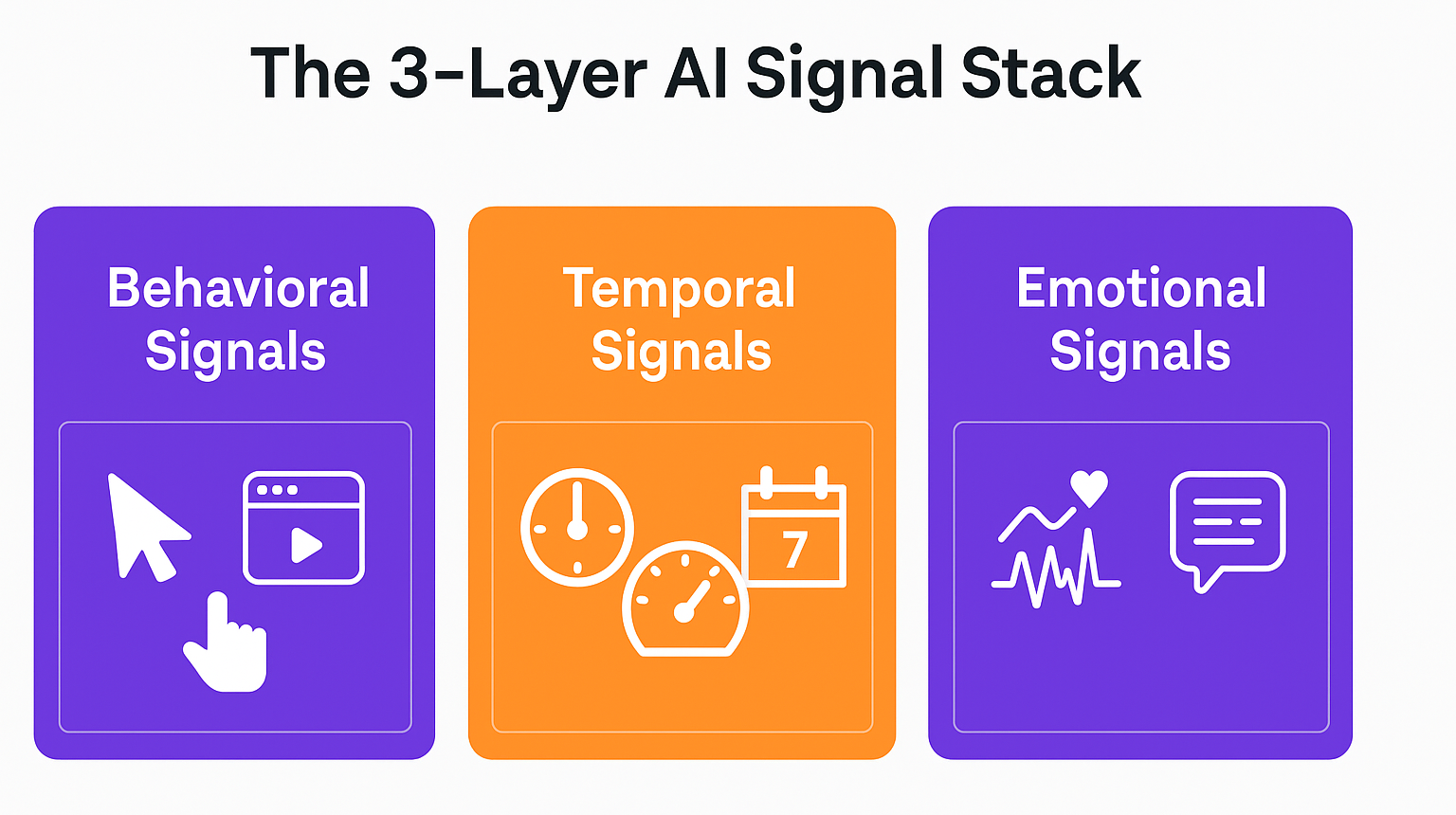
Understanding the Deep Structure of Behavioral Signals
A behavioral signal is any measurable action, pattern, or emotional cue that correlates with future buyer movement. AI systems extract signals from interactions across multiple modalities—text, voice, timing data, historical patterns, and environmental conditions. Because these modalities each convey different aspects of buyer psychology, signal tracking requires multi-dimensional feature analysis and long-horizon pattern recognition.
Modern signal tracking engines analyze behavioral layers such as:
- Intent Micro-Patterns — Short bursts of activity, repeat visits, or engagement spikes that correlate with internal decision-making.
- Emotional Variance Signatures — Changes in sentiment, tone, or reaction consistency that forecast psychological shifts.
- Timing Harmonics — Recurring interaction windows that indicate predictable rhythms of cognitive availability.
- Momentum Alignment — Whether micro-actions consistently move toward deeper engagement or return to neutral.
These layers allow AI engines to interpret signals with extraordinary precision. Small signals—often invisible to humans—become high-confidence predictors when analyzed across thousands of interactions. A three-second response delay, a micro-change in message structure, or a subtle tonal variation can meaningfully alter a system’s interpretation of buyer readiness.
Why Humans Miss What AI Detects Instantly
Humans are excellent at understanding direct conversation, emotional tone, and immediate intent—but they are extremely poor at detecting micro-patterns or interpreting large-scale behavioral data. Sales professionals may recognize strong buying signals, but they cannot detect small variations in timing or compare patterns across hundreds of prospects simultaneously. They lack the computational memory required to evaluate months of micro-data with perfect accuracy.
AI systems compensate for these cognitive limitations. They detect:
- Sub-Perceptual Timing Changes humans cannot track.
- Emotional Drift across dozens of interactions.
- Cross-Persona Momentum Patterns that require massive dataset comparison.
- Recurrence Frequency indicating internal buyer dialogue.
Signal tracking therefore becomes an augmentation—not a replacement—of human intuition. It provides the accuracy, scale, and consistency that humans cannot produce, while allowing teams to interpret high-level patterns with greater strategic clarity. This combination creates a dual-intelligence engine, elevating forecasting, routing, and engagement quality across all stages of the pipeline.
The Three Categories of Signals That Predict Hot Prospects
Signal tracking science classifies buyer behavior into three primary categories, each representing a different predictive layer within the decision cycle. These categories—behavioral, emotional, and temporal—each play distinct roles in forecasting progression and identifying hot prospects with precision.
First are behavioral signals, which measure what buyers do. These include actions such as returning to a specific resource, re-reading material, accelerating communication pace, or introducing multiple internal stakeholders into a conversation. Behavioral signals form the structural foundation of predictive modeling.
Second are emotional signals, which measure how buyers feel. Emotional alignment or misalignment strongly influences cycle momentum. Subtle shifts in tone, pacing, or sentence structure create emotional signals that AI systems analyze to detect friction, interest, readiness, or skepticism.
Third are temporal signals, which measure when buyers act. Timing patterns reveal cognitive readiness, internal decision cycles, and preferred engagement windows. AI engines detect temporal harmonics that reveal the buyer’s natural rhythm of attention and decision-making.
Together, these three categories form a comprehensive predictive matrix. By analyzing the interplay between them, AI systems can identify which prospects are accelerating toward purchase, which are hesitating, and which are likely to stall. These insights allow revenue teams to prioritize high-value opportunities and allocate resources with unprecedented precision.
Why Signal Strength Defines Opportunity Velocity
Signal strength is one of the strongest predictors of future opportunity velocity. When multiple strong signals converge—behavioral consistency, emotional alignment, and timing predictability—the probability of progression rises sharply. When signals weaken, fragment, or conflict, the system interprets these variations as increased friction or uncertainty.
Strong signals often correlate with:
- Internal Decision Alignment — The buyer has begun forming an internal consensus.
- Risk Reduction — Emotional stability suggests confidence and reduced perceived risk.
- Information Absorption — Buyers demonstrate cognitive assimilation through timing and behavior.
- Momentum Continuity — Engagement remains consistent across multiple touchpoints.
Weak or conflicting signals, on the other hand, indicate psychological uncertainty, informational misalignment, or competing priorities. These signals slow the pipeline, create forecasting volatility, and reduce conversion quality. Understanding the strength and consistency of signals becomes essential for predicting whether opportunities will accelerate, stall, or reverse.
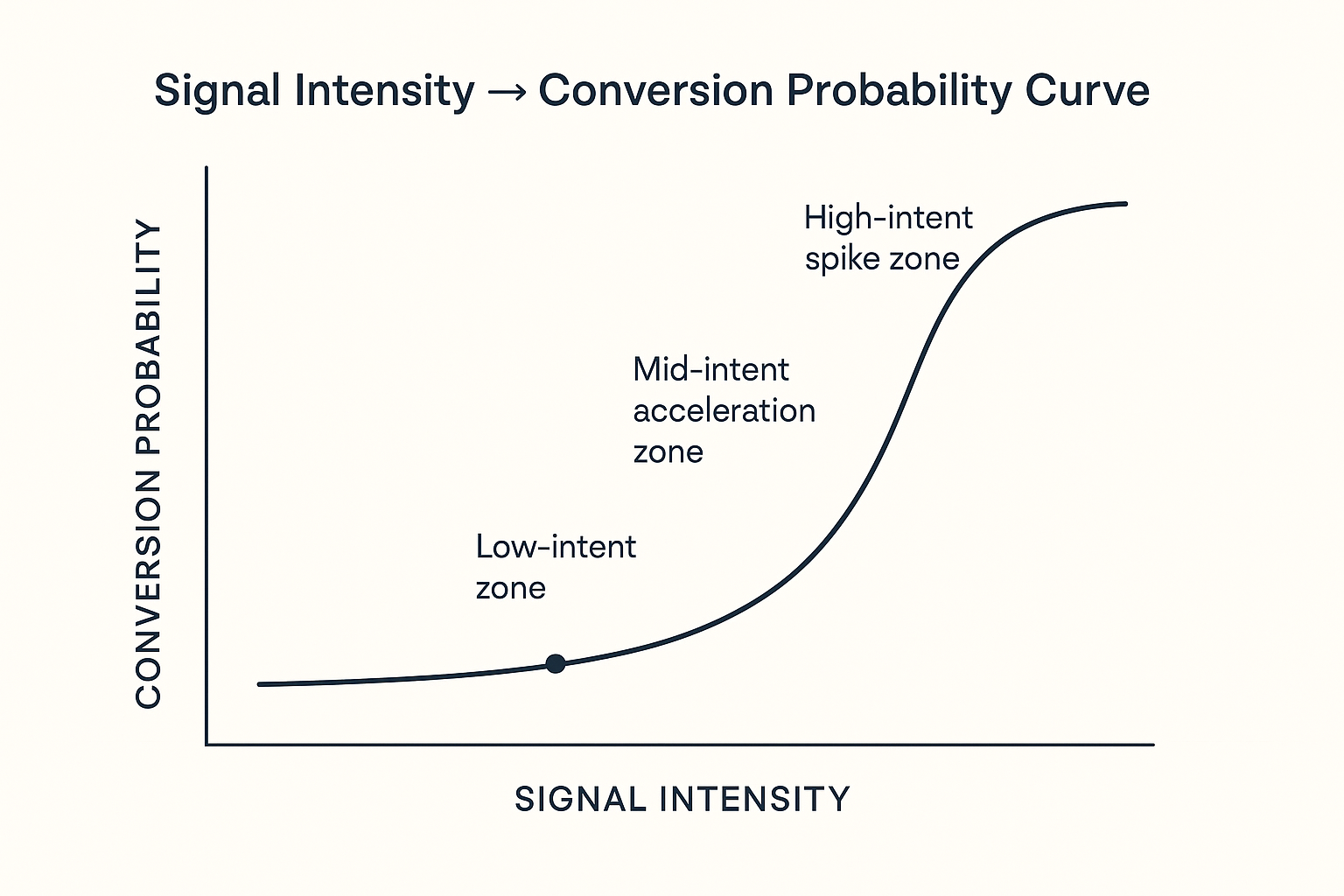
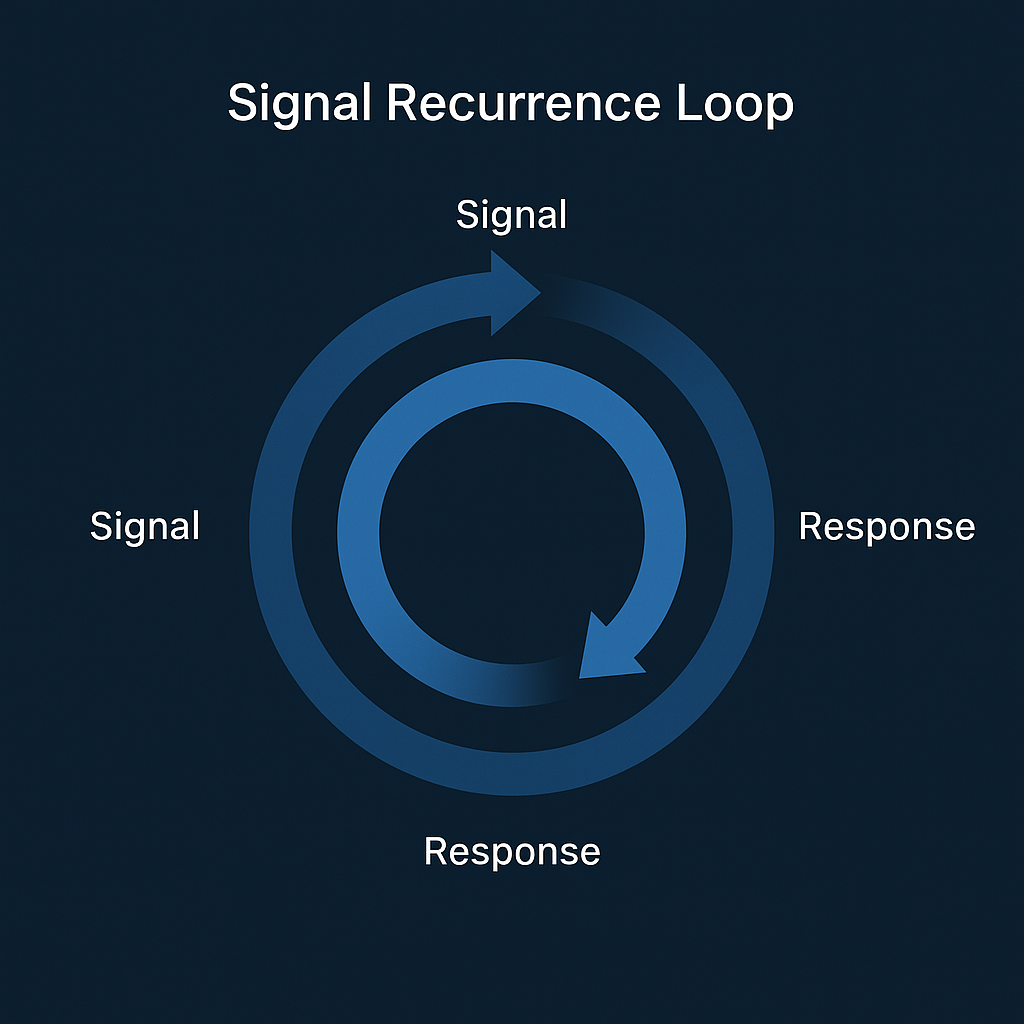
The Role of Signal Recurrence in Predicting Purchase Intent
Signal recurrence—the frequency with which key signals reappear—offers one of the clearest indicators of internal buyer activity. Recurrence indicates active evaluation, internal discussion, or reconsideration, often long before a prospect communicates their intentions directly. AI engines excel at measuring these recurrence loops, identifying subtle repetitions that humans would never recognize.
For instance, a buyer who repeatedly returns to a pricing overview, replays a specific demo segment, revisits a case study, or reopens a scheduling email is demonstrating behavioral reinforcement. This recurrence suggests that cognitive prioritization is occurring behind the scenes, often signaling the transition into a readiness phase.
Recurrence frequency is highly predictive because it reflects internal intent formation—the unseen decision-making process that precedes external commitments. When combined with emotional signals and timing harmonics, recurrence becomes a leading indicator of imminent momentum. It allows AI-driven systems to forecast readiness with remarkable accuracy, enabling targeted engagement before competitors even recognize a shift.
Interpreting Signals Through the Lens of AI Metrics Frameworks
Signal tracking cannot be understood in isolation. Its predictive value depends on how it integrates with broader performance ecosystems such as modern KPI frameworks. Insights from AI metrics that matter reveal how signal quality, frequency, and emotional resonance create a KPI hierarchy that predicts long-range revenue outcomes. Traditional metrics—conversion rates, call volumes, and meeting counts—offer lagging insight. Signal metrics offer leading insight. They show what is about to happen, not what has already occurred.
Signal tracking engines interpret KPIs differently from human operators. They do not treat metrics as isolated statistics but as interconnected intelligence layers. For example, a spike in micro-hesitation signals may precede a drop in opportunity velocity, even if high-level KPIs appear stable. Conversely, a burst of positive sentiment signals may signal imminent acceleration even before conversion rates shift. This is why metrics and signals must be examined together—the system sees relationships humans cannot.
When signal tracking is integrated with performance KPIs, forecasting engines gain a multi-dimensional perspective. They combine behavioral analysis with predictive weighting to determine where the buyer is psychologically, emotionally, and cognitively. This produces forecasts that are both accurate and adaptable—allowing organizations to intervene at the right moments with the right strategies.
Predictability Patterns as Revealed Through Signal Intelligence
Signal tracking becomes especially powerful when mapped against long-range buyer predictability patterns. Insights from B2B buyer predictability insights show that buyers follow surprisingly stable psychological and behavioral rhythms, even when market conditions shift. AI systems identify these rhythms through recurring signal patterns—micro-pauses, timing harmonics, emotional fluctuations, and informational return loops.
Predictability does not mean rigidity. Rather, it means that human behavior is shaped by cognitive load, internal consensus formation, risk posture, and informational processing sequences. Signal tracking measures these internal dynamics with clarity no human team could replicate. By mapping these patterns, AI engines predict not only what buyers will do next but why they will do it—revealing the deeper motivations driving engagement.
When signals indicate high predictability, systems can accelerate cycles by aligning engagement timing, emotional framing, and sequence pacing. When signals indicate unpredictability, systems slow the cadence or recalibrate messaging to reduce friction. This adaptive behavior is the foundation of modern AI-driven sales orchestration.
Competitive Landscape Analysis Through Signal Behavior
While signal tracking reveals buyer behavior, it also exposes competitive dynamics within a category. Insights from competitive landscape analysis show that buyers generate distinct signal patterns when evaluating multiple vendors simultaneously. These patterns reveal the presence, influence, and relative strength of competitors, offering unprecedented visibility into competitive positioning.
For instance, elongated hesitation loops often indicate competitive friction. Oscillating sentiment patterns may reflect internal debate between solutions. Sudden drops in signal recurrence may indicate that a competitor temporarily captured buyer attention. These competitive signals enable forecasting engines to adapt in real time—adjusting engagement tone, increasing informational density, or shifting emphasis to areas where competitive differentiation is strongest.
This signal-based competitive intelligence gives organizations a structural advantage. They do not simply react to competitor movements—they anticipate them. This anticipation becomes one of the most valuable forms of predictive insight in fast-moving industries.
Hear the Trend in Motion — Live
This is how modern autonomous sales sounds when theory meets execution.
How Omni Rocket Reflects Today’s Sales Reality in Conversation:
- Always-On Response – Engages leads the moment demand signals appear.
- Behavior-Driven Progression – Advances conversations based on buyer intent, not scripts.
- Unified Funnel Execution – Books, transfers, and closes within one continuous system.
- Real-Time Adaptation – Adjusts tone, pacing, and approach mid-conversation.
- Scalable Consistency – Sounds the same at 10 calls or 10,000.
Omni Rocket Live → The Trend Isn’t Coming. You Can Hear It Now.
Ethical and Compliance Signals: A New Layer of Predictive Insight
Signal tracking does not only measure buyer behavior—it measures infrastructure integrity. Insights from compliance-ready AI standards reveal that ethical alignment shapes signal stability across the entire pipeline. Systems designed with transparent routing, fair sequencing, compliant messaging, and responsible automation produce cleaner, more consistent signals. Systems with weak ethical controls produce noisy or distorted signals that degrade predictive accuracy.
Ethical signals reveal whether buyers trust the system, perceive risk, or feel emotionally aligned. These signals influence everything from timing receptivity to information absorption. When ethical alignment is strong, signal volatility decreases and forecasting accuracy increases. When ethical alignment is weak, signals become erratic, leading to misinterpretation, momentum loss, or emotional disconnect.
Because ethical behavior influences signal fidelity, compliance becomes a KPI multiplier. It enhances the system’s ability to detect true behavioral patterns rather than noise generated by distrust, skepticism, or confusion.
Signal Mapping Inside Full-Funnel Automation Systems
Signal tracking reaches maximum predictive power when integrated within full-funnel automation architectures. Insights from AI automation tutorials show that end-to-end systems generate richer signal networks because they track buyer behavior continuously across every interaction layer. This continuity allows forecasting engines to detect multi-stage relationships between signals that appear unrelated when viewed in isolation.
For example, a prospect’s micro-hesitation during an early outreach message may correlate with their tone during a later conversation. Their pattern of returning to specific informational resources may correlate with cycle acceleration during pricing review. Full-funnel systems detect these cross-stage connections, allowing forecasting engines to produce more accurate, psychologically aware predictions.
Because of this, organizations that adopt end-to-end signal tracking experience far greater forecasting consistency. They reduce variance, improve momentum continuity, and eliminate blind spots caused by fragmented data. The system sees the entire behavioral landscape—not just isolated touchpoints—enabling holistic predictive insight.
Neuroscience-Level Insights From Signal-Driven Dialogue Analysis
Signal tracking becomes even more powerful when integrated with voice analysis and conversational intelligence. Insights from AI neuroscience dialogue research reveal that micro-patterns in speech—pacing, intonation, pause frequency, emotional markers—are among the strongest predictors of buying intent.
These patterns reveal cognitive states such as:
- Cognitive Overload — Irregular pacing, extended pauses, and reduced tonal variance.
- Emotional Confirmation — Smooth pacing, stable intonation, and increased resonance.
- Risk Aversion — Tight phrasing, clipped sentences, or subtle tonal withdrawal.
- Readiness Transition — Increased pace, rising cadence, and reduced hesitation windows.
These neuroscience-level conversational signals cannot be captured through traditional metrics. They require multimodal models capable of analyzing voice, emotion, rhythm, and speech architecture simultaneously. AI systems convert these micro-patterns into predictive insight, creating some of the most accurate hot-prospect indicators available today.
Using Megascale Trend Intelligence to Interpret Signals Over Long Horizons
While same-category and cross-category signals reveal immediate opportunity patterns, long-horizon interpretation requires megascale intelligence models. The AI trend forecasting report provides the macro-context necessary for interpreting how short-term signals align with multi-year shifts in buyer psychology, competitive behavior, and market evolution.
Megascale intelligence identifies whether specific signal patterns represent temporary micro-trends or long-term behavioral changes. For example, a rise in hesitation signals across an entire industry may indicate economic uncertainty or shifting organizational priorities. A sudden increase in emotional resonance signals across high-value opportunities may reflect a structural change in buyer expectations or value drivers.
When organizations combine signal intelligence with trend intelligence, they gain predictive clarity unavailable through either model alone. They understand both near-term momentum and long-term trajectory, enabling them to adapt with agility while planning with strategic precision.
The Multi-Layered Structure of Opportunity Signals
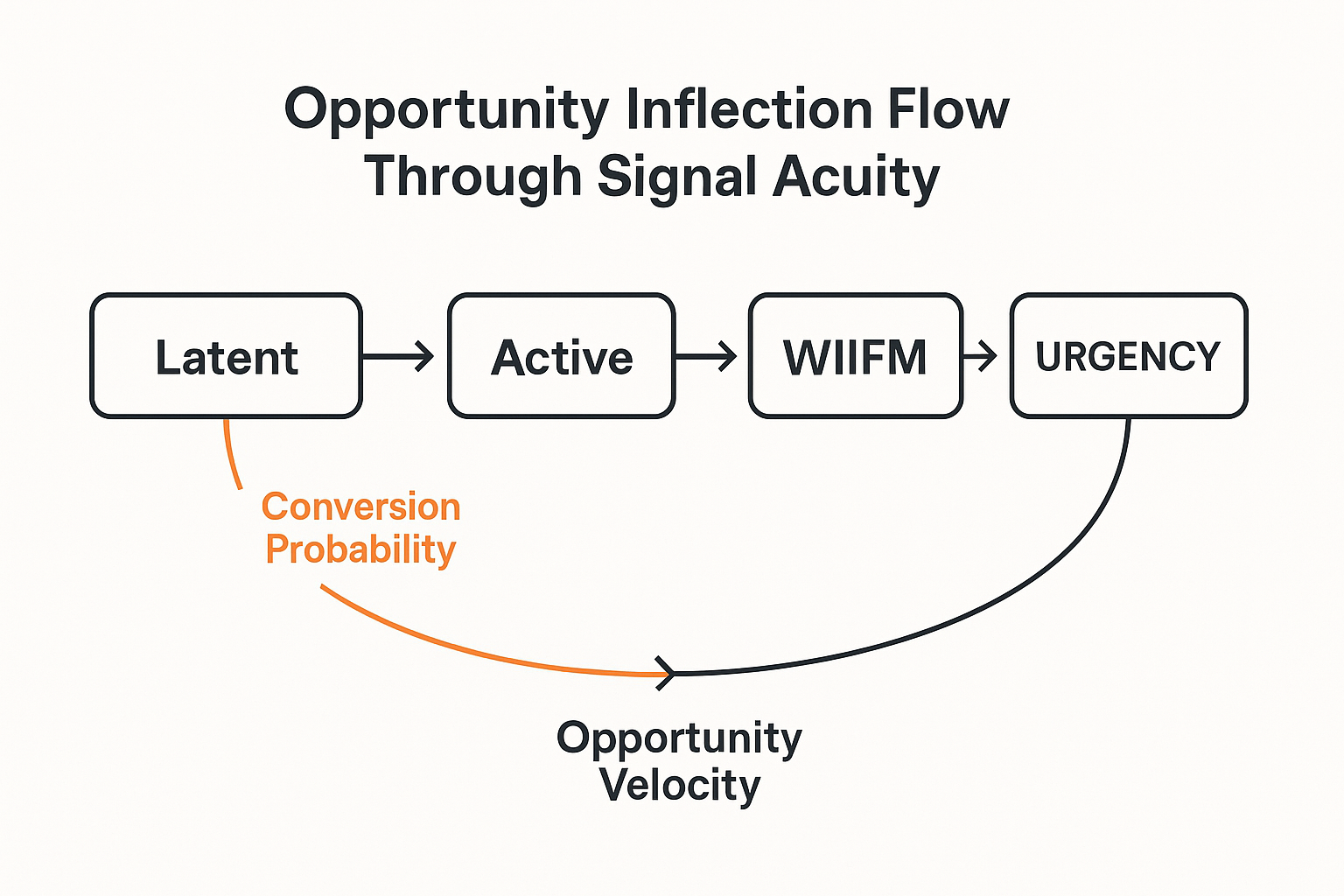
Signal tracking reveals the multi-layered structure of opportunity progression. Hot prospects generate signal combinations that differ from standard opportunities—not because they act differently, but because their internal decision dynamics evolve faster and with greater emotional coherence. AI systems detect these layered patterns by evaluating how behavioral, emotional, and temporal signals converge.
In hot prospects, these patterns often include:
- High Recurrence Frequency — Repeated engagement with key materials or messages.
- Spiking Momentum Indicators — Rapid increases in interaction density or message responsiveness.
- Stable Emotional Signals — Consistent sentiment patterns and reduced friction markers.
- Predictive Window Narrowing — Tightened timing harmonics that indicate converging decision cycles.
These layered signals reflect internal consensus-building—a stage where buyers align priorities, discuss implications, and refine their evaluation criteria. When forecasting engines detect these layers, they identify hot prospects not through intuition but through mathematically grounded, behaviorally consistent evidence.
Operationalizing Signals Within Predictive Team Frameworks
Signal tracking becomes operationally transformative when connected to the strategic frameworks used by modern sales teams. Insights from the AI Sales Team predictive operations architecture show that signal intelligence changes how organizations sequence engagement, distribute workload, prioritize opportunities, and optimize each stage of the revenue journey.
Within team environments, signals function as dynamic routing indicators. Rather than assigning prospects based on static attributes such as industry, region, or company size, AI-driven teams use signal states to determine who should engage, when they should engage, and what type of engagement will produce the highest probability of progression. This creates a fluid operational system where opportunities move according to psychological readiness rather than arbitrary structural rules.
Predictive operations frameworks enable teams to interpret signals collectively, ensuring that no single human operator becomes a bottleneck. Because AI monitors signal changes continuously, teams can respond immediately to sudden shifts—whether positive or negative. This reduces cycle volatility and increases consistency across the pipeline.
Signal-Driven Forecasting Engines and Their Role in Predictive Accuracy
Forecasting engines strengthen dramatically when integrated with signal intelligence. Insights from the AI Sales Force forecasting engines demonstrate how signal-weighted models produce far more accurate predictions than traditional forecasting methods. These engines interpret signal patterns as part of a larger behavioral narrative, creating a predictive architecture grounded in real-time emotional, cognitive, and behavioral shifts.
Traditional forecasting relies heavily on self-reported pipeline stages, subjective probability estimates, or arbitrary conversion assumptions. These systems are often inaccurate because they depend on human interpretation, which is inconsistent and prone to optimism bias. Signal-driven forecasting models eliminate this error by grounding predictions in observable, measurable, and continuously updated behavior.
Forecasting engines analyze signals at multiple levels:
- Micro-Level Signals — Hesitations, timing delays, micro-patterns in response cadence.
- Meso-Level Signals — Sentiment trends, multi-interaction coherence, cross-channel alignment.
- Macro-Level Signals — Structural shifts indicating internal decision-making or competitive influence.
By combining these levels, AI forecasting engines calculate revenue movement with extraordinary clarity. They identify which opportunities will progress, which will stall, and which require corrective intervention. This removes guesswork and aligns organizational expectations with empirical reality.
How Transfora Enhances Signal Interpretation Through Dynamic Routing
Signal tracking reaches another level of performance when paired with intelligent routing systems. Transfora dynamic call routing amplifies signal accuracy by ensuring that the right conversations occur at the right moments, based on real-time behavioral indicators. Because routing decisions directly influence emotional alignment and engagement quality, routing optimization becomes a signal amplifier.
Transfora evaluates signals such as timing windows, cognitive readiness markers, historical sentiment, and interest continuity to route interactions to the most appropriate channel or human operator. This adaptive ability reduces friction, accelerates progression, and eliminates mismatches between buyer state and engagement style.
Dynamic routing has a measurable impact on:
- Engagement Resonance — Ensuring the buyer is contacted at a psychologically receptive moment.
- Cycle Efficiency — Reducing wasted touchpoints and unnecessary communication.
- Signal Fidelity — Capturing cleaner, higher-quality signals for forecasting engines.
- Opportunity Momentum — Maintaining progression without emotional or informational drag.
With Transfora operating as the functional interpreter of signal states, organizations gain a structurally superior engagement system—one that adapts continuously and behaves with intelligence, precision, and emotional stability.
Building a Multi-Layered Signal Intelligence System
To fully operationalize signal tracking, organizations must build layered intelligence systems consisting of behavioral analytics, emotional modeling, timing harmonics, and predictive forecasting engines. Each layer contributes a unique dimension of insight, and the interplay between them forms a complete picture of buyer readiness.
The most sophisticated systems include:
- Real-Time Behavioral Monitors — Tracking every micro-action, interaction, and informational return.
- Sentiment and Emotion Engines — Analyzing tone, variance, pacing, and affective signals.
- Temporal Rhythm Models — Detecting cycles of attention, decision readiness, and cognitive load.
- Predictive Correlation Maps — Identifying how signals interact across stages.
- Adaptive Forecasting Modules — Rewriting predictions automatically based on signal changes.
A signal intelligence system is not static—it learns, evolves, and recalibrates. As datasets expand, the system becomes more accurate and more capable of predicting complex psychological states. Over time, organizations gain predictive advantage rooted not in intuition but in computational truth.
The Hidden Indicators That Make a Prospect Truly “Hot”
The concept of a "hot prospect" is often misunderstood. Many organizations define “hot” by activity volume or explicit interest. But AI systems use deeper metrics—ones grounded in cognitive science and behavioral economics.
Hot prospects demonstrate:
- Signal Density — Multiple strong signals appearing in close temporal proximity.
- Emotional Stability — Consistent sentiment patterns indicating clarity and confidence.
- Internal Consensus Indicators — Patterns showing multi-stakeholder alignment.
- Pattern Coherence — Signals that reinforce each other rather than conflict.
- Momentum Harmonics — Engagement cycles that accelerate instead of plateauing.
These hidden markers are invisible to humans but highly visible to AI. They indicate that the buyer has moved from exploration into internal justification—a psychological phase where decision gravity increases rapidly.
Because these signals predict progression far earlier than traditional indicators, they become the defining attributes of opportunity quality in autonomous sales environments.
From Signal Interpretation to Strategic Action
Strong signal interpretation without action offers no value. The true power of signal tracking emerges when organizations convert predictive insight into strategic behavior. AI systems recommend adjustments such as shifting messaging cadence, recalibrating emotional framing, intensifying informational density, or reallocating internal resources based on signal states.
Organizations that operationalize signals outperform competitors because they:
- Act Before the Buyer Asks — Reducing friction and accelerating readiness.
- Eliminate Timing Errors — Ensuring outreach aligns with cognitive availability.
- Strengthen Competitive Positioning — Responding immediately to signal shifts caused by rival solutions.
- Improve Forecast Accuracy — Making strategic decisions grounded in empirical behavior.
This is the structural advantage of an AI-powered signal system—it enables organizations to compete on intelligence, not intuition.
Final Synthesis: Why Signal Tracking Defines the Future of Autonomous Sales
Signal tracking is not a feature—it is the structural foundation of predictive sales systems. Every major advancement in forecasting, routing, sequencing, and engagement quality relies on clean, interpretable, emotionally aware, behaviorally rich signals. Organizations that master these signals achieve stability, precision, and competitive advantage unavailable through traditional analytics.
Signal tracking will continue to expand in sophistication as multi-modal models evolve, voice analysis deepens, and long-horizon trend intelligence becomes more tightly integrated with daily operations. Over time, organizations that invest in signal-first architectures will gain visibility into opportunity dynamics long before their competitors, allowing them to shape markets rather than chase them.
For teams committed to building a predictive, high-velocity revenue engine, integrating advanced signal systems is no longer optional—it is the decisive capability that separates industry leaders from everyone else. As organizations adopt richer forecasting frameworks, stronger behavioral models, and more autonomous routing engines, the role of signal intelligence will only grow in strategic importance.
To build this level of predictive performance into your revenue architecture, one of the most effective accelerators is the structured orchestration that begins with advanced automation setup. Explore configuration options at the AI Sales Fusion pricing model to integrate predictive routing, behavioral analytics, and signal-driven optimization across your entire pipeline.

Comments