

Where
Autonomous
Sales Take Off
Fueling the Future of Autonomous AI Sales
Discover how AI books, transfers, and one-call closes — turning sales pipelines into rocket fuel.
Your Best Closer. Every Call. Monumental Growth.
You Learn → Sales Ignite. Easy Math.
Hear It Now • Real AI Sales Call
No Humans. Real Objections. Real AI Sales Execution.
Most people stop realizing it’s AI halfway through.

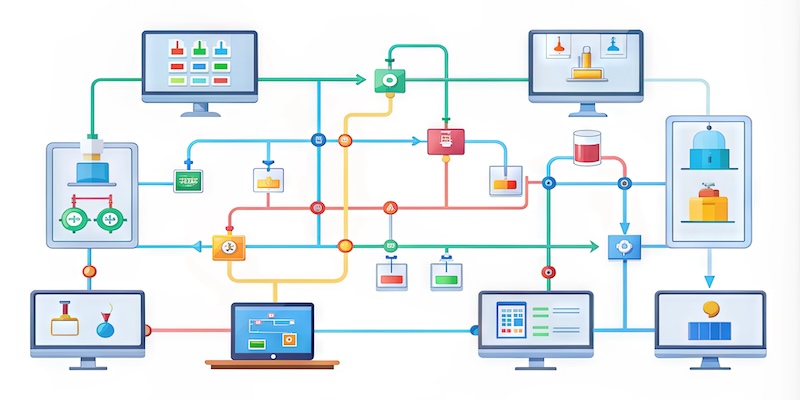
Designing Unified AI Sales Systems Without Tool Sprawl Risk
Unified AI sales systems exist to eliminate the execution gaps created when revenue operations are assembled from disconnected tools. In derivative context, this article builds directly on The Fragmentation Tax in Sales Automation, extending its core thesis from cost analysis into concrete system design implications. Where fragmentation imposes hidden penalties, unified systems convert signal continuity into reliable execution.
From a category perspective, the distinction between unified systems and stacked toolchains sits at the center of modern autonomous sales technology frameworks. Toolchains optimize individual functions—dialing, transcription, routing, CRM updates—but rarely coordinate authority, timing, and state across the full execution path. Unified systems are engineered to do the opposite: treat perception, decisioning, and action as a single governed flow.
Architecturally, the difference appears at the execution boundary. Stacked tools exchange data asynchronously through APIs, webhooks, and delayed CRM writes. Unified systems share live state: call context, validated intent, escalation permissions, and execution constraints. This distinction determines whether signals are acted on immediately or reinterpreted downstream, often too late to preserve buyer readiness.
Operational reality reinforces why this boundary matters. Telephony jitter, transcription latency, voicemail detection errors, call timeout thresholds, token limits, and prompt drift all distort signal fidelity. When execution logic is distributed across tools, these distortions compound. When execution is unified, guardrails absorb variability without fragmenting decision authority.
- Execution continuity: maintain shared state from signal detection to action.
- Authority alignment: bind routing and escalation to governed permissions.
- Latency tolerance: design for real-world telephony and transcription delays.
- System accountability: ensure decisions are auditable and reversible.
This framing establishes why unified AI sales systems are not simply consolidated toolsets, but execution architectures designed to prevent fragmentation by design. The next section examines how stacked sales toolchains introduce hidden execution gaps that unified systems are explicitly built to eliminate.
Why Stacked Sales Toolchains Create Hidden Execution Gaps
Stacked sales toolchains are typically assembled to optimize individual functions rather than end-to-end execution. Dialers focus on connection rates, transcribers optimize accuracy, CRMs emphasize record keeping, and sequencing tools automate follow-ups. Each component performs its role well in isolation, yet none are responsible for preserving execution continuity once a buyer interaction crosses tool boundaries.
The core problem is that stacked architectures externalize coordination. Signals detected in one system must be interpreted and acted upon by another, often through asynchronous APIs, delayed webhooks, or batch CRM updates. By the time execution occurs, the original signal has aged, lost context, or been flattened into generic fields that no longer carry decision weight.
Execution gaps emerge precisely at moments where timing and authority matter most. A buyer expresses readiness during a call, but the scheduling system does not receive confirmation until minutes later. A transfer condition is met, but routing logic resides in a different service that lacks live context. These gaps are not visible in dashboards, yet they directly impact conversion reliability.
This dynamic is why organizations experience compounding sales fragmentation penalties as stacks grow. Each additional tool introduces another handoff where intent must be reinterpreted instead of executed, increasing variance and operational drag without improving outcomes.
- Asynchronous handoffs: execution lags behind signal detection.
- Context dilution: intent is reduced to generic fields or scores.
- Authority ambiguity: no system owns the decision to act.
- Hidden latency: delays accumulate across tool boundaries.
These hidden gaps explain why adding more tools often reduces reliability instead of improving it. The next section examines how unified sales architectures close these gaps by centralizing execution responsibility rather than distributing it across disconnected systems.
How Unified Sales Architectures Reduce System Fragmentation
Unified sales architectures reduce fragmentation by collapsing perception, decisioning, and execution into a single coordinated system. Instead of passing signals across loosely coupled tools, unified designs maintain a shared execution state that travels with the buyer interaction from first contact through resolution. This structural choice eliminates the interpretive gaps that arise when intent must be reconstructed downstream.
At the system level, unification changes how signals are treated. In stacked environments, signals are logged, stored, and later evaluated. In unified environments, signals are evaluated in context, in real time, and immediately bound to execution authority. This distinction determines whether buyer readiness is acted upon while it is valid or degraded into historical data.
Technically, unified architectures share live state across voice transport, transcription, routing logic, and CRM updates. Call context, validated intent markers, escalation permissions, and timing constraints are synchronized continuously rather than exchanged after the fact. This allows execution decisions to be made deterministically instead of heuristically.
This design approach is formalized in unified AI sales blueprints, which treat fragmentation as an architectural failure rather than an operational inconvenience. By enforcing shared state and centralized authority, these architectures prevent intent from being diluted as it moves through the system.
- Shared execution state: maintain one authoritative source of intent.
- Real-time decisioning: act on signals while they are still valid.
- Centralized authority: remove ambiguity about who may execute.
- Deterministic behavior: replace guesswork with governed logic.
By reducing fragmentation at the architectural level, unified sales systems convert signal fidelity into execution reliability. The next section examines the specific failure patterns that emerge when sales operations rely on multi-tool stacks instead of unified execution environments.
Operational Failure Patterns Inside Multi Tool Sales Stacks
Operational failures inside multi tool sales stacks rarely appear as outright system outages. Instead, they surface as subtle breakdowns in execution timing, authority, and accountability. Because responsibilities are distributed across tools, no single system is responsible for ensuring that buyer intent is acted on correctly at the moment it is confirmed.
Common failure patterns include delayed routing after a readiness signal, duplicate follow-ups triggered by competing automations, and stalled handoffs when one tool waits for confirmation another never sends. Each failure is small in isolation, but together they introduce variability that makes outcomes unpredictable and difficult to diagnose.
At the leadership level, these breakdowns translate into fragmented execution risks. Revenue leaders see declining close rates, rising handle times, and inconsistent forecasting, even though individual tools report strong performance metrics. The issue is not tool quality, but the absence of a governing execution layer.
From an engineering standpoint, multi tool stacks lack a clear decision boundary. Signals are detected in one place, decisions are inferred in another, and actions are executed somewhere else entirely. Without a unified authority model, the system cannot reliably determine which signals are actionable and which should be ignored.
- Decision ambiguity: no single system owns execution timing.
- Automation collisions: overlapping tools trigger conflicting actions.
- Delayed response: readiness signals decay before execution occurs.
- Root cause opacity: failures are difficult to trace across tools.
These failure patterns explain why organizations often add more tooling to solve problems that tooling itself created. The next section examines how execution orchestration responsibilities must be centralized to prevent these breakdowns from occurring in the first place.
Execution Orchestration Responsibilities Across Sales Platforms
Execution orchestration defines how decisions move from signal detection into controlled action across a sales environment. In fragmented stacks, orchestration is implicit and distributed: each tool assumes another component will handle the next step. Unified systems reverse this assumption by assigning explicit responsibility for when, how, and under what conditions execution is allowed to proceed.
At an operational level, orchestration governs timing, authority, and sequencing. It decides whether a call should escalate, whether a transfer is permitted, whether a commitment can be captured, and whether downstream systems are authorized to act. Without a centralized orchestration layer, these decisions are inferred from partial data, leading to inconsistent outcomes even when signals are detected correctly.
Modern unified systems formalize orchestration through dedicated execution control layers such as execution orchestration governance, which coordinate live call state, validated intent markers, escalation permissions, and rollback conditions in real time. This allows execution decisions to be deterministic rather than opportunistic, preserving both speed and correctness.
From an engineering standpoint, orchestration integrates telephony events, transcription updates, prompt state, CRM writes, and routing logic into a single decision surface. Tokens, timeouts, voicemail detection, and call state transitions are all evaluated together, ensuring that execution reflects the full context of the interaction rather than isolated events.
- Centralized control: assign one system responsibility for execution timing.
- Authority enforcement: bind actions to explicit permissions.
- State synchronization: maintain shared context across all components.
- Deterministic outcomes: replace inferred decisions with governed logic.
When orchestration responsibilities are clearly defined, execution becomes predictable and auditable rather than reactive. The next section examines how tool sprawl disrupts signal flow and decision authority when orchestration is absent or fragmented.
Why Tool Sprawl Breaks Signal Flow and Decision Authority
Tool sprawl breaks signal flow by forcing buyer intent to traverse multiple systems before it can influence execution. Each handoff introduces translation, delay, and loss of context, turning real-time conversational signals into stale data points. When intent is fragmented across tools, no single system can confidently determine whether readiness is still valid at the moment action is required.
Decision authority erodes as signal ownership becomes unclear. One system detects engagement, another stores the record, and a third attempts to act. Without a centralized authority model, execution decisions are made based on incomplete visibility, leading to either premature escalation or excessive caution. Both outcomes reduce reliability and undermine buyer trust.
This breakdown has measurable economic consequences reflected in unified pipeline economics, where fragmented signal flow increases cycle time, lowers close rates, and inflates cost per acquisition. The issue is not signal quality, but the system’s inability to preserve and act on that signal coherently.
From a systems design view, restoring authority requires collapsing signal detection and execution permission into the same decision layer. When the system that hears readiness is also empowered to act on it, signals retain their value. When authority is split, signals decay before they can influence outcomes.
- Signal decay: intent loses relevance as it moves between tools.
- Authority dilution: no system is empowered to act decisively.
- Latency amplification: delays accumulate across integrations.
- Outcome variance: execution depends on timing luck, not design.
Tool sprawl therefore converts high-quality signals into low-confidence decisions. The next section examines why event-driven execution models outperform sequenced automation when preserving signal integrity and authority is required.

Performance Isn’t Claimed — It’s Demonstrated
Omni Rocket shows how sales systems behave under real conditions.
Technical Performance You Can Experience:
- Sub-Second Response Logic – Engages faster than human teams can.
- State-Aware Conversations – Maintains context across every interaction.
- System-Level Orchestration – One AI, multiple operational roles.
- Load-Resilient Execution – Performs consistently at scale.
- Clean CRM Integration – Actions reflected instantly across systems.
Omni Rocket Live → Performance You Don’t Have to Imagine.
Event Driven Sales Execution Versus Sequenced Automation
Event driven execution treats buyer interactions as state changes that immediately influence system behavior. When a readiness signal is detected, the system advances execution in real time, preserving intent while it is still valid. Sequenced automation, by contrast, advances based on predefined steps rather than validated state, assuming that completion implies readiness.
This distinction becomes critical in live sales environments where timing and authority are tightly coupled. Sequenced systems queue actions—follow-ups, transfers, or escalations—without re-evaluating whether the buyer’s state still justifies those actions. Event driven systems continuously re-assess conditions, allowing execution to proceed only when readiness criteria are met.
The limits of sequencing are evident in sequencer automation limits, where linear workflows fail under real-world variability. Interruptions, delays, and partial responses break the assumptions baked into sequences, causing automation to act out of sync with buyer intent.
Event driven models avoid these failures by binding execution permission to live signals rather than step completion. Telephony events, transcription updates, response latency, and acceptance of next steps are evaluated together, ensuring that execution reflects current reality instead of historical progress.
- State awareness: advance execution only when readiness is confirmed.
- Real-time evaluation: continuously reassess buyer signals.
- Sequence resilience: adapt to interruptions without breaking flow.
- Authority alignment: bind actions to validated conditions.
By prioritizing state over steps, event driven execution preserves intent and reduces variance in outcomes. The next section examines how this approach improves system reliability when sales operations are consolidated into unified platforms.
System Reliability Advantages of Unified Sales Platforms
System reliability in sales execution is measured by consistency under variance, not peak performance under ideal conditions. Unified sales platforms are engineered to maintain correct behavior despite interruptions, latency, and partial failures. By consolidating perception, decisioning, and execution into a single control plane, these platforms prevent localized faults from cascading into systemic breakdowns.
In contrast, stacked toolchains distribute responsibility across components that were never designed to share authority. When one tool degrades—due to telephony jitter, transcription lag, or delayed CRM writes—downstream systems continue operating as if conditions were normal. Unified platforms detect and absorb these anomalies centrally, adjusting execution rather than blindly advancing.
This reliability advantage is evident in enterprise sales fusion systems, where execution logic is resilient by design. Live call state, intent validation, routing permissions, and rollback paths are evaluated together, allowing the system to pause, reroute, or defer actions without losing context or authority.
From an engineering standpoint, unified platforms replace brittle integration chains with internal guarantees. Call timeout thresholds, voicemail detection outcomes, prompt state, token limits, and messaging retries are all governed by the same execution logic. This eliminates the guesswork that plagues multi-tool environments when conditions deviate from the expected path.
- Central fault handling: absorb anomalies without breaking execution.
- Context preservation: maintain state across retries and delays.
- Adaptive control: adjust behavior based on live conditions.
- Deterministic recovery: resume execution without requalification.
Reliability at scale is therefore an architectural property, not an operational accident. Unified sales platforms deliver consistent outcomes because they are designed to remain correct when reality diverges from plan. The next section examines the economic consequences of fragmentation and why reliability directly influences revenue efficiency.
Economic Impact of Fragmented Sales Technology Stacks
The economic impact of fragmented sales technology stacks is rarely visible in individual tool metrics, yet it is decisive at the revenue system level. Fragmentation introduces hidden costs through longer cycle times, higher retry rates, and increased human intervention, all of which compound as volume scales. These costs are structural, not incidental, and they persist regardless of how well individual tools perform.
Fragmented stacks inflate operational expense by forcing organizations to compensate for execution gaps manually. Sales teams spend time requalifying prospects, resolving automation conflicts, and recovering stalled interactions. Engineering teams invest in custom integrations and monitoring just to maintain baseline reliability. None of this activity increases conversion efficiency; it merely offsets architectural deficiencies.
This relationship is captured in analyses of live intent replacement models, where systems that act on real-time readiness outperform those that rely on delayed scoring signals. Fragmentation prevents intent from being executed while it is still economically valuable, shifting revenue from predictable outcomes to probabilistic recovery.
At scale, these inefficiencies distort forecasting and investment decisions. Leaders misattribute volatility to market conditions or rep performance, when the root cause lies in system design. Fragmented stacks produce noisy data that obscures true demand signals, making revenue planning less accurate and more reactive.
- Cycle time inflation: delays reduce the value of captured intent.
- Cost per outcome: manual recovery increases operational expense.
- Revenue variance: inconsistent execution produces unstable results.
- Forecast distortion: fragmented data undermines planning accuracy.
The economic case against fragmentation is therefore inseparable from execution design. Systems that preserve intent and authority convert signals into revenue efficiently, while fragmented stacks leak value at every handoff. The next section examines the governance controls required to prevent these losses at enterprise scale.
Governance Controls Required for Enterprise Sales Execution
Enterprise-scale execution requires governance controls that extend beyond access management or reporting oversight. In autonomous sales environments, governance determines which actions the system is permitted to take, under what conditions, and with which safeguards. Without these controls, automation advances optimistically, assuming correctness rather than enforcing it.
Effective governance aligns execution authority with validated intent. Escalation thresholds, routing permissions, and commitment capture rights must be explicitly defined and enforced by the system, not inferred from conversational flow. This prevents downstream components from acting on ambiguous signals and ensures that execution remains consistent across volume and variation.
At the organizational level, governance connects autonomous behavior to accountable ownership through coordinated AI sales agents. Each agent operates within a clearly scoped mandate, allowing the system to scale decision-making without sacrificing control. This structure enables autonomy while preserving auditability and policy compliance.
From a systems perspective, governance is implemented through rule engines, permission layers, and observable decision logs. Telephony events, transcription confidence, response latency, and prompt state are all evaluated against policy before execution is allowed to proceed. These controls ensure that speed never outruns trust.
- Explicit permissions: define which actions are authorized.
- Policy enforcement: bind execution to validated conditions.
- Decision traceability: log why actions occurred.
- Scalable oversight: govern behavior without manual review.
Governance controls transform autonomous sales from a collection of automations into a disciplined execution system. The next section examines how organizations replace fragmented toolchains with end-to-end sales systems that embed these controls by design.
Replacing Toolchains With End to End Sales Systems
Replacing fragmented toolchains with end-to-end sales systems requires more than consolidating vendors or simplifying integrations. It demands a shift in how execution responsibility is defined and enforced. Instead of coordinating outcomes across multiple tools, organizations centralize perception, decisioning, and action within a single governed system that owns the full interaction lifecycle.
This transition begins by identifying where execution authority currently breaks down. In stacked environments, dialing, transcription, routing, messaging, and CRM updates often operate independently, each advancing based on local logic. End-to-end systems remove these boundaries, allowing live call state, validated intent, and escalation permissions to be evaluated together before any action is taken.
Operationally, end-to-end systems replace asynchronous handoffs with continuous state awareness. Telephony events, voicemail detection outcomes, call timeout thresholds, and prompt transitions are processed within the same execution context. This prevents downstream components from acting on outdated information and eliminates the need for manual reconciliation when tools disagree.
At scale, this consolidation aligns execution with organizational authority through a unified sales execution engine. Decisions about routing, escalation, and commitment capture are enforced consistently, enabling teams to scale volume without introducing variance or losing control.
- Lifecycle ownership: assign one system responsibility for execution.
- State continuity: maintain context across every interaction phase.
- Authority consolidation: remove ambiguity from decision rights.
- Operational simplicity: reduce integration overhead and recovery work.
Replacing toolchains therefore simplifies execution by design rather than by exception. The final section outlines how organizations can migrate from fragmented stacks to unified systems without disrupting live operations.
Designing a Migration Path From Stacks to Unified Systems
Designing a migration path from stacked toolchains to unified sales systems requires careful sequencing to avoid disrupting live revenue operations. The objective is not to replace everything at once, but to progressively centralize execution authority while maintaining continuity. Successful migrations begin by identifying which decisions must become unified first—typically routing, escalation, and commitment capture—before consolidating peripheral functions.
The initial phase focuses on shadowing execution rather than replacing it. Unified systems observe live calls, transcription streams, and CRM updates in parallel with existing tools, validating that intent detection and escalation logic behave correctly under real conditions. This approach allows organizations to test guardrails, timeout handling, voicemail detection, and call state transitions without risking production outcomes.
As confidence increases, execution authority is gradually transferred. Routing decisions, transfer permissions, and messaging actions are moved under centralized control, while legacy tools continue to operate as inputs rather than decision makers. This staged transition prevents abrupt behavioral changes and preserves operator trust during the migration.
In the final stage, unified execution becomes the primary system of record. Peripheral tools are either retired or constrained to narrow roles, and governance rules are enforced consistently across all interactions. At this point, organizations align technical architecture, operational policy, and economics under unified system pricing, ensuring that scalability, reliability, and cost efficiency advance together.
- Phased adoption: centralize authority before removing tools.
- Parallel validation: test execution logic alongside live systems.
- Controlled transition: shift decision rights incrementally.
- Economic alignment: match system design to sustainable pricing.
A disciplined migration path allows organizations to escape tool sprawl without sacrificing momentum or control. By unifying execution gradually and deliberately, sales systems evolve from fragile integrations into resilient architectures capable of scaling intent, trust, and revenue in lockstep.

Comments